Kakegawa Castle

掛川城·Kakegawa-jo

D Tourism Score 58/100
B Defense Score 72/100

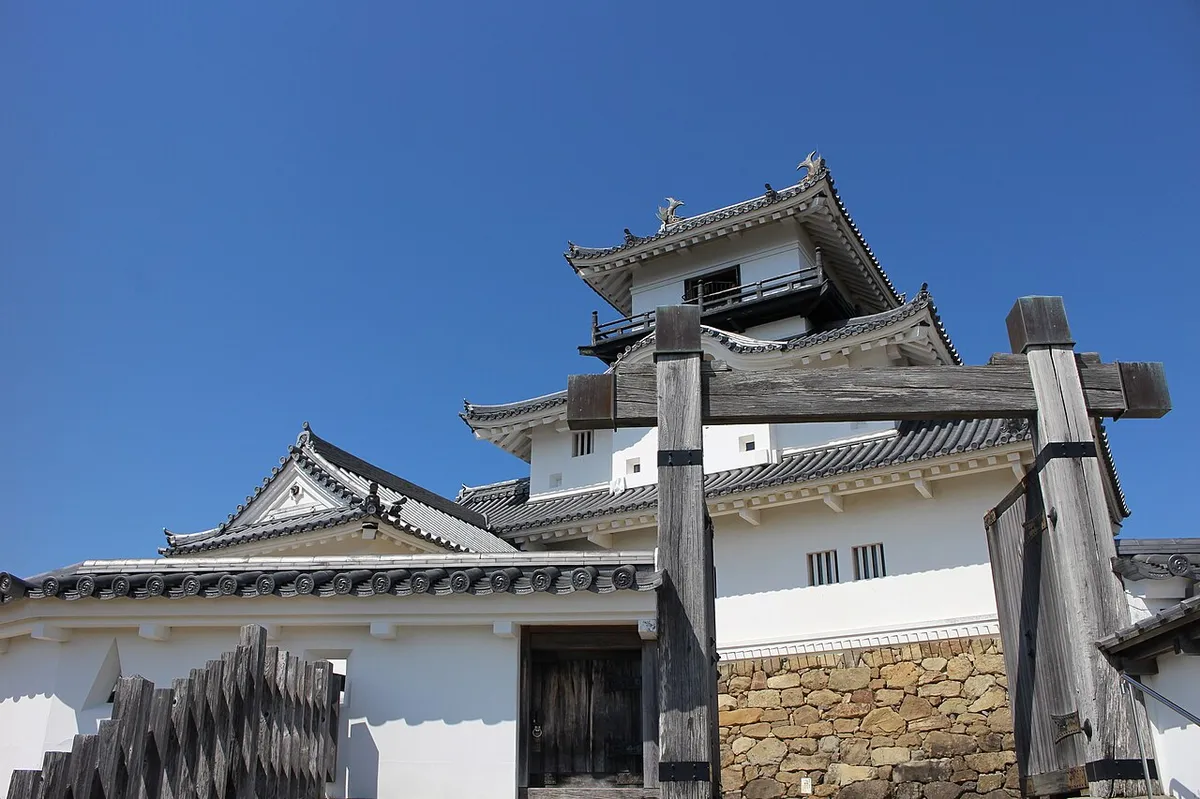
The pioneer of wooden castle reconstruction — Kakegawa proved in 1994 that real timber and real joinery could bring a castle back, setting the standard for every wooden reconstruction that followed.

#42 — 100 Famous Castles Reconstructed
Kakegawa Castle (掛川城)
Photo:行政課/Wikimedia Commons/CC BY 4.0

Quick Facts

Quick Facts

Admission
¥410

¥150

Hours
09:00 – 17:00

Last entry 16:30

Nearest Station
Kakegawa Station (JR Tokaido Main Line / Tokaido Shinkansen)
Walk from Station
12 min walk
Time Needed
1.5–2 hours

Combined ticket includes the main tower (Tenshu), Ninomaru Palace (Ninomaru Goten), and Kakegawa Castle Museum. Children (elementary school age and under) ¥150.

Defense Overview

Defense Overview

Why Kakegawa Castle was hard to attack

This castle is hard to attack because it combines a raised core with defended outer space with enough defensive depth to slow attackers before the center.

An attacker would not get a simple direct approach to the center. They would have to cross water barriers or moat lines and push through successive outer areas before the core.

Overall score

72/100

Estimated range

66–78

Confidence

A

Strong multi-source support

This is a site-original comparison score for learning and comparison, not a reconstruction of one historical battle.

Radar view

Terrain 15/20 Entrance 14/20 Internal 16/20 Siege 14/20 Oversight 13/20
How this estimate was built+

This estimate combines broad terrain, approach, layout, and route-control signals. It is meant to explain the castle's defensive logic in plain English, not reconstruct a single historical attack.

Terrain Advantage

How much the terrain itself seems to help: height, slope, ridges, cliffs, water edges, and limited approach directions.

15/20

Entrance Defense

How awkward and dangerous the first entry looks: gates, bridge or moat crossings, chokepoints, and forced turns.

14/20

Internal Complexity

How hard it seems to keep pushing after entry: layered baileys, depth, compartmentalization, and repeated defensive lines.

16/20

Siege Endurance

A rough sense of long-hold potential: moats, water access, space, storage plausibility, and defensive staying power.

14/20

Strategic Oversight

How much the castle appears to command nearby roads, plains, rivers, basins, harbors, or town approaches.

13/20

Why Visit

Kakegawa offers two attractions in one ticket: the 1994 wooden main tower (a landmark in Japanese castle reconstruction) and the 1861 Ninomaru Palace (a genuine surviving original building). The tower is small but authentic in feel — climbing the steep wooden stairs inside a properly built wooden structure is a fundamentally different experience from concrete reconstructions. The palace gives you the residential side of castle life. Easy access from the shinkansen (12-minute walk) makes this an ideal stopover visit on the Tokaido corridor.

Highlights

1

Japan's First Postwar Wooden Castle Reconstruction

When Kakegawa rebuilt its main tower in 1994, it broke new ground in Japanese castle reconstruction — it was the first castle in postwar Japan to be rebuilt entirely in traditional wood using period-accurate construction techniques. No concrete, no steel frame: real wood, real joints, real craftsmanship. This set the template and the standard for wooden reconstructions at Ozu, Shiroishi, and others that followed.
2

The Ninomaru Palace — A Rare Survivor

While most castle palaces were demolished in the Meiji era or burned in WWII, Kakegawa's Ninomaru Goten (Second Bailey Palace) survives as a designated Important Cultural Property. Built in 1861 after an earthquake destroyed the previous building, it is one of the few remaining castle residential palaces in Japan — a place where the castle's domestic life rather than its military architecture is preserved.

3

Yamauchi Kazutoyo — The General Who Gambled on Sekigahara

Kakegawa's most famous lord, Yamauchi Kazutoyo, made one of the Sengoku period's most consequential decisions: after attending the Battle of Sekigahara (1600) on Tokugawa Ieyasu's eastern side, he received Tosa Province (Shikoku) as his reward. His domain moved to a much larger territory, and Kakegawa passed to other lords. The Yamauchi family had started as minor retainers — Sekigahara made them major daimyo.

Structure Details

Visitor tip

Start at the Ninomaru Palace (ground level, Important Cultural Property) and walk through its original interior rooms, then climb the steps to the main tower. Inside the 1994 wooden tower, the steep wooden staircases are authentic to period castle construction — no elevator, remove shoes to enter. The tower is small but the craftsmanship of the 1994 wooden reconstruction is the attraction.

Castle type

Hill castle

Hill-top flatland castle — built on Kakegawa Hill, a low natural rise above the surrounding town and rice paddies

Layout type

Linked compound layout

Compound style — main tower and subsidiary structures on the hilltop, with the Ninomaru Palace on the lower slope

Main tower

Wooden reconstruction (1994) — Japan's first postwar wooden castle reconstruction, built using traditional techniques without modern structural steel or concrete. Modeled on Edo-period records and historical survey drawings of the original 1621 tower, which was destroyed by the 1854 Ansei Tokai earthquake.

22m3 floors, 1 below

Stone walls

Natural stone stacking

Stone walls step up the hillside beneath the main tower. Some of the original Edo-period stone walls survive and frame the approach to the reconstructed tower. The combination of original stone and reconstructed wood gives the site a coherent historical atmosphere.

Moats

A partial moat system survives on the north and east sides of the hill. The castle's primary defense was its elevated position rather than water moats, but the moat remnants add to the historical atmosphere.

Key defensive features

Kakegawa Hill Elevation

The castle sits on a natural hill above the surrounding plain — modest in height compared to mountain castles, but sufficient to give defenders a commanding view over approach routes and to make direct assault costly.

Ninomaru Palace as Secondary Defense

The palace complex on the lower slope served as a buffer between the town and the main tower. Any attacker who breached the outer defenses would still face the elevated honmaru with its tower.

The Story of Kakegawa Castle

Originally built 1469 / Imagawa Yoshitada (ordered construction)
Current form 1621 / Matsudaira Tadanao (main tower built in current form)
    1469

    The Imagawa clan establishes a fortification at Kakegawa. The site on the hill above the Tokaido highway is strategically valuable for controlling traffic between the Kanto and Kinki regions.

    1569

    Tokugawa Ieyasu besieges Kakegawa Castle, which is held by朝比奈 Asahina Yasutomo on behalf of the Imagawa. The siege lasts three months before the castle surrenders through negotiation — a demonstration of both the castle's defensive capability and Ieyasu's preference for bloodless resolution when possible.

    1590

    Yamauchi Kazutoyo becomes lord of Kakegawa after the reorganization that followed Hideyoshi's unification. He begins significant castle improvement works.

    1600

    Yamauchi Kazutoyo sides with Tokugawa Ieyasu at Sekigahara. As a reward, he is granted the much larger Tosa Province (now Kochi Prefecture). The castle passes to a succession of other Tokugawa-allied lords.

    1621

    The main tower is rebuilt in its definitive Edo-period form, a three-story structure visible for miles around.

    1854

    The Ansei Tokai Earthquake destroys the main tower and many castle buildings. The tower is never rebuilt during the Edo period — the political and financial conditions of late Edo Japan made such reconstruction impractical.

    1994

    The main tower is reconstructed entirely in traditional wood — the first such wooden castle reconstruction in postwar Japan. The project uses historical records and techniques validated by castle historians and traditional carpenters, setting a new standard for castle preservation in Japan.

Did You Know?

  • The 1994 wooden reconstruction used no modern structural reinforcements — it is held together entirely by traditional Japanese wooden joinery, the same techniques used in the original 17th-century construction. Specialist carpenters trained in traditional castle construction techniques were brought in specifically for the project.
  • The earthquake that destroyed the original main tower (the 1854 Ansei Tokai Earthquake) also severely damaged Edo, Shizuoka, and much of the Tokaido coast — it was one of the most destructive earthquakes in Japanese history, with an estimated magnitude of 8.4.
  • Yamauchi Kazutoyo's wife, Chiyo, is famous in Japanese popular culture for her financial acumen — she saved money throughout their lean years and presented her husband with a valuable horse as a gift. He rode the horse to Sekigahara and it reportedly caught Ieyasu's attention. The story is likely embellished but Chiyo is celebrated as a 'wise wife' in Japanese folklore.
  • Kakegawa is known today as a major center of green tea production — the surrounding hills are covered in tea fields, and the castle town's historical atmosphere combined with tea culture makes for an unusual day trip from the shinkansen corridor.

Score Breakdown

Tourism Score

D 58/100
  • Accessibility 17 /20
  • Foreign-Friendly 10 /20
  • Historical Value 13 /20
  • Visual Impact 12 /20
  • Facilities 6 /20

Defense Score

B 72/100
  • Terrain Advantage 15 /20
  • Entrance Defense 14 /20
  • Internal Complexity 16 /20
  • Siege Endurance 14 /20
  • Strategic Oversight 13 /20

Planning Your Visit

Best Time to Visit

Year-round. Spring cherry blossoms on the hilltop are attractive. Autumn for clear views. Weekday mornings have the thinnest crowds.

Time Needed

1.5–2 hours

Insider Tip

Spend time in the Ninomaru Goten before climbing the main tower — the palace interior gives you a sense of castle domestic life that is rarer and arguably more historically interesting than another tower climb. Look at the ceiling details and sliding door paintings in the main reception rooms. Then climb the tower for the views and for the experience of being inside Japan's first modern wooden reconstruction.

Map

Getting There

Nearest station: Kakegawa Station (JR Tokaido Main Line / Tokaido Shinkansen)
Walk from station: 12 min walk
Parking: Paid parking available near the castle. Walking from the shinkansen station is recommended.
Accessible with a JR Pass

Admission

Adult¥410
Child¥150

Combined ticket includes the main tower (Tenshu), Ninomaru Palace (Ninomaru Goten), and Kakegawa Castle Museum. Children (elementary school age and under) ¥150.

Opening Hours

Open09:00 – 17:00
Last entry16:30

Open year-round. Closed December 29 to January 3.

Facilities

  • – English guides
  • – Audio guide
  • – Wheelchair access
  • ✓ Restrooms
  • ✓ Gift shop
  • ✓ Food nearby

Nearby Castles

Featured in collections

FAQ

Frequently Asked Questions

How do I get to Kakegawa Castle?

The nearest station is Kakegawa Station (JR Tokaido Main Line / Tokaido Shinkansen). From there it is about 12 minutes on foot.

How much does Kakegawa Castle cost to enter?

Adult admission is ¥410 and child admission is ¥150.

Is Kakegawa Castle worth visiting?

Kakegawa offers two attractions in one ticket: the 1994 wooden main tower (a landmark in Japanese castle reconstruction) and the 1861 Ninomaru Palace (a genuine surviving original building). The tower is small but authentic in feel — climbing the steep wooden stairs inside a properly built wooden structure is a fundamentally different experience from concrete reconstructions. The palace gives you the residential side of castle life. Easy access from the shinkansen (12-minute walk) makes this an ideal stopover visit on the Tokaido corridor.

What are the opening hours of Kakegawa Castle?

09:00 to 17:00, last entry 16:30.

How long should I spend at Kakegawa Castle?

Plan for about 1.5–2 hours, depending on how closely you want to explore the grounds.