Hamamatsu Castle

浜松城·Hamamatsu-jo

D Tourism Score 58/100
B Defense Score 75/100

Where Ieyasu lost everything and came back stronger — the 'Castle of Advancement' that shaped the future shogun through his darkest hour.

#148 — Continued 100 Castles Reconstructed
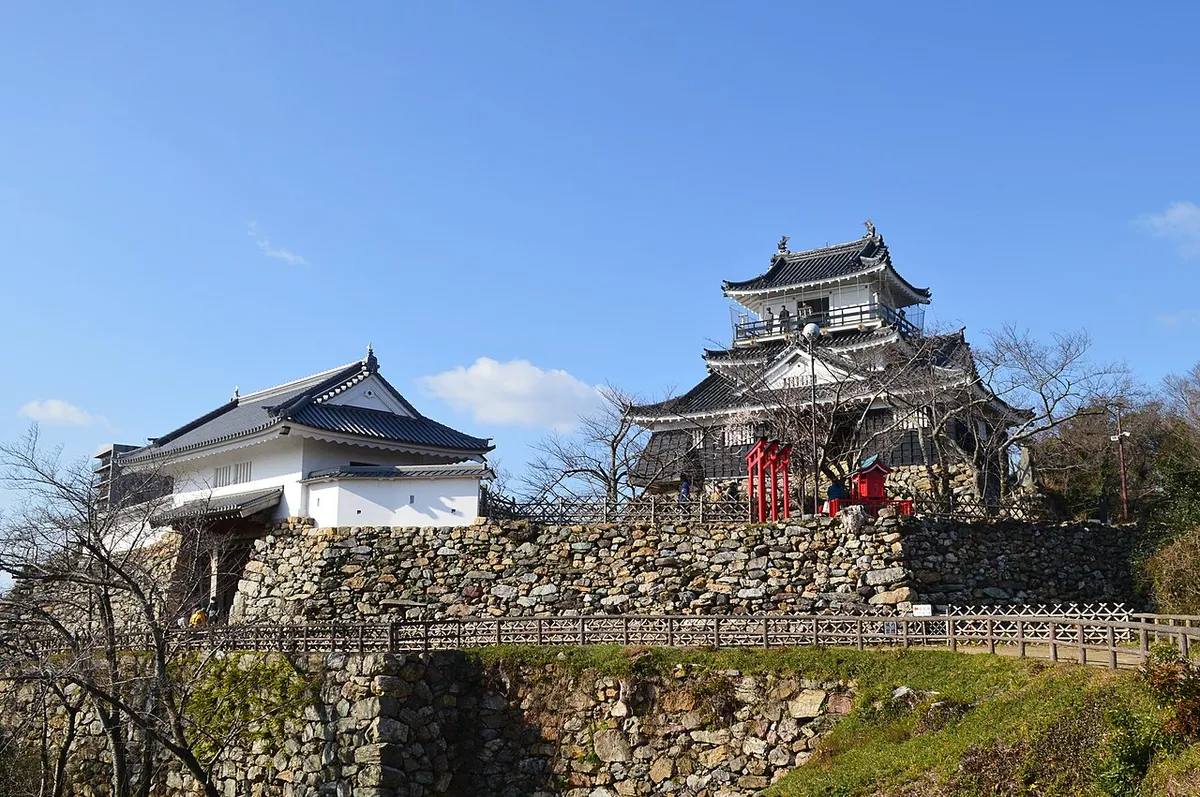
Hamamatsu Castle (浜松城)
Photo:Saigen Jiro/Wikimedia Commons/CC0

Quick Facts

Quick Facts

Admission
¥200

¥0

Hours
08:30 – 16:30

Last entry 16:00

Nearest Station
Hamamatsu Station (JR Tokaido Main Line / Tokaido Shinkansen)
Walk from Station
25 min walk

Bus also available

Time Needed
1–1.5 hours

Adults ¥200. Elementary school age and under free. Remarkably affordable admission for a castle with significant historical associations.

Defense Overview

Defense Overview

Why Hamamatsu Castle was hard to attack

This castle is hard to attack because it combines a raised core with defended outer space with enough defensive depth to slow attackers before the center.

An attacker would not get a simple direct approach to the center. They would have to cross water barriers or moat lines and push through successive outer areas before the core.

Overall score

75/100

Estimated range

69–81

Confidence

A

Strong multi-source support

This is a site-original comparison score for learning and comparison, not a reconstruction of one historical battle.

Radar view

Terrain 15/20 Entrance 14/20 Internal 16/20 Siege 16/20 Oversight 14/20
How this estimate was built+

This estimate combines broad terrain, approach, layout, and route-control signals. It is meant to explain the castle's defensive logic in plain English, not reconstruct a single historical attack.

Terrain Advantage

How much the terrain itself seems to help: height, slope, ridges, cliffs, water edges, and limited approach directions.

15/20

Entrance Defense

How awkward and dangerous the first entry looks: gates, bridge or moat crossings, chokepoints, and forced turns.

14/20

Internal Complexity

How hard it seems to keep pushing after entry: layered baileys, depth, compartmentalization, and repeated defensive lines.

16/20

Siege Endurance

A rough sense of long-hold potential: moats, water access, space, storage plausibility, and defensive staying power.

16/20

Strategic Oversight

How much the castle appears to command nearby roads, plains, rivers, basins, harbors, or town approaches.

14/20

Why Visit

Hamamatsu Castle is primarily a history experience rather than an architecture experience — the concrete tenshu is modest and the ruins unremarkable, but the Ieyasu narrative is rich and the museum content is well-presented. The 'frightened portrait' story alone makes it worth a stop for anyone interested in the human dimensions of the Sengoku period. Easily combined with a Shinkansen stop at Hamamatsu Station.

Highlights

1

Where Ieyasu Lost — and Learned

Hamamatsu Castle was Tokugawa Ieyasu's primary base from 1570 to 1586 — the formative years of his rise to power. It was from Hamamatsu that he launched the disastrous Battle of Mikatagahara (1573), where Takeda Shingen's forces crushed his army and he barely escaped with his life, reportedly defecating himself from fear during the retreat. The castle is nicknamed 'Shusseki-jo' — 'Castle of Advancement' — because every lord who held it went on to higher positions. Ieyasu himself went on to become shogun.
2

Original Stone Walls from Ieyasu's Era

While the reconstructed concrete tenshu is historically controversial, the ishigaki stone walls of Hamamatsu Castle are genuine and partially original — some sections date from the Ieyasu period of the 1570s–1580s. The wild-stone (nozurazumi) walls visible around the Honmaru are among the oldest surviving castle stone works in the Tokai region.

3

The 'Castle of Advancement'

Hamamatsu Castle had a remarkable subsequent history after Ieyasu's departure: every lord (including Ieyasu himself) who served as castle lord was later promoted to a higher domain. The castle acquired the nickname 'Shusseki-jo' as a result — and Hamamatsu residents today take quiet pride in this association, viewing the castle as a symbol of ambition rewarded.

Structure Details

Visitor tip

The reconstructed tenshu functions primarily as a small museum about Hamamatsu's history and Ieyasu's time at the castle — three floors with exhibits, armor, and period documents. The stone walls around the Honmaru are the most historically authentic element. The surrounding park is large and pleasant for a stroll with views toward the city and Hamamatsu Bay on clear days.

Castle type

Hill castle

Hill-top flatland castle — built on a low natural plateau above the Hamamatsu plain

Layout type

Linked compound layout

Compound style — main tower compound connected to secondary compounds

Main tower

Concrete reconstruction (1958) — three-story tower based on historical records. Does not accurately reflect the original tower's size or design.

15.5m3 floors

Stone walls

Natural stone stacking

The surviving stone walls (ishigaki) of Hamamatsu Castle include sections that are genuinely old — the rough, organic character of the nozurazumi style reflects early castle construction techniques before the more refined methods of the Edo period. The walls are one of the site's most historically authentic elements.

Moats

Original moat system partially surviving, visible in the park landscape. The Honmaru compound retains moat traces on its lower sides.

Key defensive features

Plateau Position

The castle sits on a natural plateau that provides elevated position above the surrounding Hamamatsu plain, with natural slope defense on multiple sides. While modest compared to mountain castles, the position gave clear sightlines in all directions.

Ieyasu-Era Stone Walls

The surviving original ishigaki from the 1570s–80s represents some of the oldest castle stone work in the region — built during the period when Ieyasu was still learning the craft of castle construction and developing the techniques that would later produce masterworks like Edo Castle.

The Story of Hamamatsu Castle

Originally built 1570 / Tokugawa Ieyasu
Current form 1570 / Tokugawa Ieyasu
    1570

    Tokugawa Ieyasu relocates his primary base from Okazaki Castle to Hamamatsu, reflecting his expanding control westward into Totomi Province. He begins substantial construction on the existing fortification on the plateau, making it his main castle for the next 17 years.

    1572

    Takeda Shingen leads a massive invasion force west through Totomi Province — the 'Nishigari' ('Western Hunt') campaign — threatening to push through to Kyoto. Ieyasu, with Oda Nobunaga's support, prepares to meet him.

    1573

    The Battle of Mikatagahara: Ieyasu leads his forces out of Hamamatsu to intercept Takeda Shingen's army in the open field. The result is a catastrophic defeat — Ieyasu's army is routed and he barely escapes back to Hamamatsu Castle. According to legend, he was so frightened during the retreat that he soiled himself. He ordered a portrait painted of himself in his terrified state — the 'Kaname Portrait' — and kept it to remind himself never to be complacent. Shingen does not press the siege, and dies of illness weeks later.

    1575

    The Battle of Nagashino: Ieyasu and Nobunaga together destroy Takeda Katsuyori's army with arquebus tactics. The threat to Hamamatsu from the east is permanently ended. Ieyasu begins consolidating his hold on all of Totomi Province.

    1586

    Tokugawa Ieyasu relocates his headquarters to Sunpu (modern Shizuoka), leaving Hamamatsu Castle to his retainer Horii Tokiharu. Ieyasu's 17 years at Hamamatsu — including his worst military defeat and his greatest victories — are over.

    1958

    A three-story concrete tenshu is reconstructed on the original Honmaru site, becoming the focal structure of Hamamatsu Castle Park. The reconstruction, based on records that may not accurately reflect the original tower's dimensions, gives the park its visual anchor if not its historical authenticity.

In Pop Culture

TV

Tokugawa Ieyasu (NHK Taiga Drama, 1983)

The 1983 NHK Taiga Drama 'Tokugawa Ieyasu' extensively covers Ieyasu's Hamamatsu period, including the Battle of Mikatagahara and the famous 'frightened portrait' story.

TV

Dobutsu Sentai / Ieyasu-focused dramas

Hamamatsu Castle and the Mikatagahara period appear in numerous dramatizations of Ieyasu's life. The 'Castle of Advancement' nickname and the defeat-and-recovery narrative make it a recurring dramatic focus.

Did You Know?

  • The 'frightened portrait' (Kaname no zu or 'Yakeyake no zu') that Ieyasu allegedly commissioned after the Battle of Mikatagahara to remind himself of his near-death experience is preserved at Osaka Castle Museum. It shows a visibly shaken, haggard figure — a remarkable self-portrait of a future shogun at his lowest moment.
  • Every lord who held Hamamatsu Castle after Ieyasu — without exception — was subsequently promoted to a larger domain or higher position. This statistical coincidence has been celebrated for centuries: the castle earned its 'Shusseki-jo' (Castle of Advancement) nickname based on a genuine pattern of its lords' careers.
  • Hamamatsu is also famous as the birthplace of Honda Motor Company (Soichiro Honda was born in Hamamatsu), Yamaha Corporation, and Kawai Musical Instruments — making it the origin point for both Japan's motorcycle industry and a significant portion of its musical instrument industry. The 'Castle of Advancement' theme extends beyond its samurai lords.

Score Breakdown

Tourism Score

D 58/100
  • Accessibility 13 /20
  • Foreign-Friendly 9 /20
  • Historical Value 16 /20
  • Visual Impact 11 /20
  • Facilities 9 /20

Defense Score

B 75/100
  • Terrain Advantage 15 /20
  • Entrance Defense 14 /20
  • Internal Complexity 16 /20
  • Siege Endurance 16 /20
  • Strategic Oversight 14 /20

Planning Your Visit

Best Time to Visit

Cherry blossom season (late March to early April) for the park setting. Pleasant year-round. Summer is hot but manageable with the park shade.

Time Needed

1–1.5 hours

Insider Tip

The most historically evocative moment at Hamamatsu is standing on the Honmaru platform with the original stone walls around you and looking out over the modern city in the direction of Mikatagahara (to the north) — trying to imagine the 29-year-old Ieyasu watching his defeated army stagger back across that plain in 1573. The concrete tower is beside the point. The platform is everything.

Map

Getting There

Nearest station: Hamamatsu Station (JR Tokaido Main Line / Tokaido Shinkansen)
Walk from station: 25 min walk
Bus: City buses from Hamamatsu Station to the castle park stop. The walk is also straightforward and pleasant.
Parking: Paid parking in Hamamatsu Castle Park. ¥150 per 30 minutes. Fills during cherry blossom season.
Accessible with a JR Pass

Admission

Adult¥200
ChildFree

Adults ¥200. Elementary school age and under free. Remarkably affordable admission for a castle with significant historical associations.

Opening Hours

Open08:30 – 16:30
Last entry16:00

Open year-round except New Year's Eve and New Year's Day (December 31–January 1). The surrounding Hamamatsu Castle Park is free and open at all times.

Facilities

  • – English guides
  • – Audio guide
  • ✓ Wheelchair access
  • ✓ Restrooms
  • ✓ Gift shop
  • ✓ Food nearby

Nearby Castles

Featured in collections

FAQ

Frequently Asked Questions

How do I get to Hamamatsu Castle?

The nearest station is Hamamatsu Station (JR Tokaido Main Line / Tokaido Shinkansen). From there it is about 25 minutes on foot. City buses from Hamamatsu Station to the castle park stop. The walk is also straightforward and pleasant.

How much does Hamamatsu Castle cost to enter?

Adult admission is ¥200 and child admission is ¥0.

Is Hamamatsu Castle worth visiting?

Hamamatsu Castle is primarily a history experience rather than an architecture experience — the concrete tenshu is modest and the ruins unremarkable, but the Ieyasu narrative is rich and the museum content is well-presented. The 'frightened portrait' story alone makes it worth a stop for anyone interested in the human dimensions of the Sengoku period. Easily combined with a Shinkansen stop at Hamamatsu Station.

What are the opening hours of Hamamatsu Castle?

08:30 to 16:30, last entry 16:00.

How long should I spend at Hamamatsu Castle?

Plan for about 1–1.5 hours, depending on how closely you want to explore the grounds.