Takatenjin Castle

高天神城·Takatenjin-jo

F Tourism Score 35/100
A Defense Score 86/100

The impregnable mountain fortress that fell to hunger, not swords — the siege that ended the Takeda clan and demonstrated that the most powerful fortresses can be defeated by patience.

#147 — Continued 100 Castles Ruins
Takatenjin Castle (高天神城)
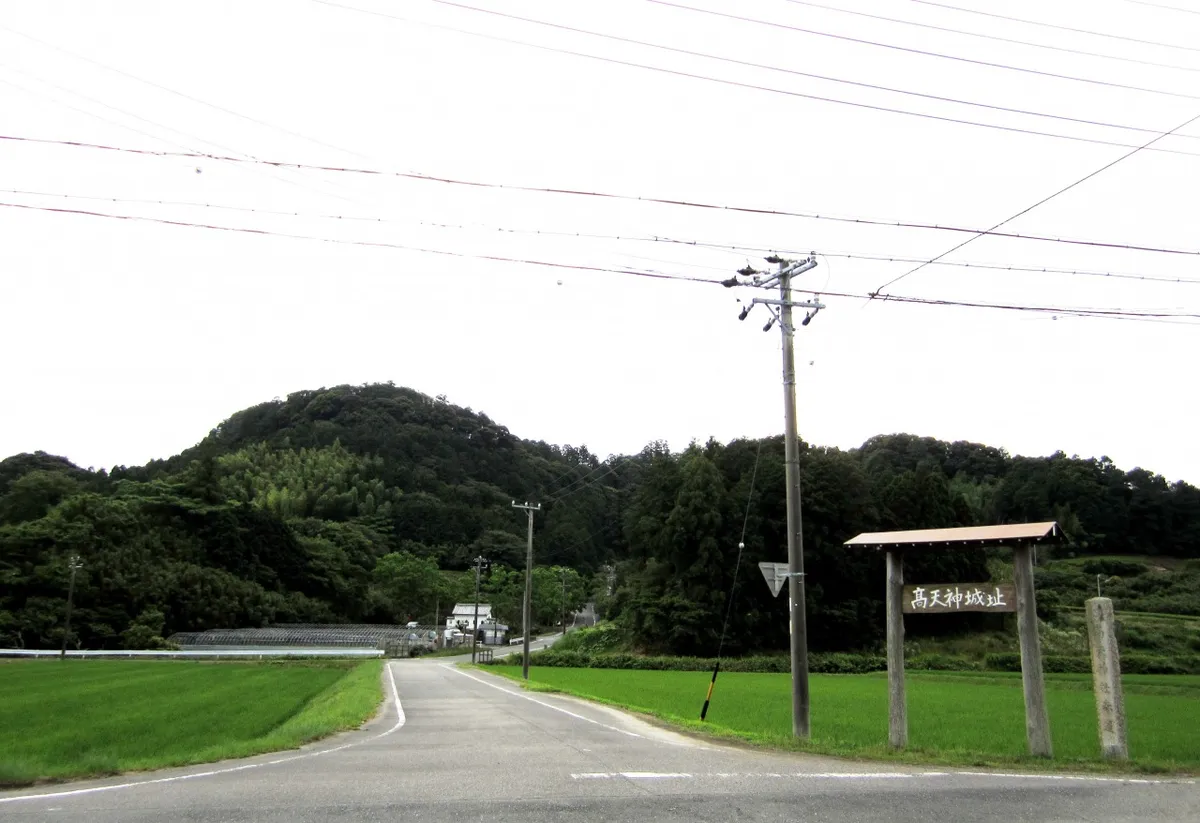
Photo:立花左近/Wikimedia Commons/CC BY-SA 3.0

Quick Facts

Quick Facts

Admission
Free Free
Hours
00:00 – 23:59
Nearest Station
Kakegawa Station (JR Tokaido Main Line / Shinkansen)
Walk from Station
60 min walk

Bus also available

Time Needed
2–3 hours including both peaks

Free access to the mountain trail and ruins. No facilities on site. Minimal signage.

Defense Overview

Defense Overview

Why Takatenjin Castle was hard to attack

This castle is hard to attack because it holds stronger ground above the surrounding approaches instead of letting attackers close on the core from easy footing.

An attacker would first have to fight the site itself before reaching the main defenses. They would have to cross water barriers or moat lines, pass tighter turns and chokepoints, and push through successive outer areas before the core.

Overall score

86/100

Estimated range

80–92

Confidence

B

Usable estimate with some inference

This is a site-original comparison score for learning and comparison, not a reconstruction of one historical battle.

Radar view

Terrain 20/20 Entrance 20/20 Internal 13/20 Siege 15/20 Oversight 18/20
How this estimate was built+

This estimate combines broad terrain, approach, layout, and route-control signals. It is meant to explain the castle's defensive logic in plain English, not reconstruct a single historical attack.

Terrain Advantage

How much the terrain itself seems to help: height, slope, ridges, cliffs, water edges, and limited approach directions.

20/20

Entrance Defense

How awkward and dangerous the first entry looks: gates, bridge or moat crossings, chokepoints, and forced turns.

20/20

Internal Complexity

How hard it seems to keep pushing after entry: layered baileys, depth, compartmentalization, and repeated defensive lines.

13/20

Siege Endurance

A rough sense of long-hold potential: moats, water access, space, storage plausibility, and defensive staying power.

15/20

Strategic Oversight

How much the castle appears to command nearby roads, plains, rivers, basins, harbors, or town approaches.

18/20

Why Visit

Takatenjin is one of the most strategically significant castle sites in Japan — the fall of this castle effectively ended one of the most celebrated military dynasties of the Sengoku period. The natural rock defenses are extraordinary and visible, the mountain setting dramatic, and the combination of the twin-peak topography with the narrative of the 1581 siege makes for an unusually complete historical experience. The views over the Enshunada coastal plain toward the Pacific Ocean are among the best from any castle site in the Tokai region.

Highlights

1

The Castle That Broke the Takeda

The siege of Takatenjin Castle (1580–1581) is one of the decisive episodes of the Sengoku period. Tokugawa Ieyasu, advised by Oda Nobunaga, surrounded the castle and cut off all supply routes rather than directly assaulting it. When Takeda Katsuyori marched to relieve the garrison — as honor required — he found Nobunaga's army blocking the route in overwhelming force. He retreated without fighting. The starving garrison surrendered. The Takeda lost face across Japan, and within a year the clan was destroyed.
2

A Castle That Could Not Be Taken — But Could Be Starved

Takatenjin sits on a split-peak mountain called Otakayama ('Great Hawk Mountain'), with two connected summits separated by a narrow saddle. The natural position is extraordinary — the rock faces are near-vertical on multiple sides, and the only viable approach follows a single narrow ridge. Direct assault was essentially impossible. Ieyasu's strategy of patient blockade, rather than attack, was the only viable approach.

3

The Garrison That Was Abandoned to Die

The final months of the 1580–1581 siege are among the most tragic episodes in Japanese castle history. The garrison of approximately 1,000 men sent increasingly desperate pleas for relief to Takeda Katsuyori. He could not break through Nobunaga's blocking force. The garrison starved. When the castle finally surrendered in May 1581, the surviving defenders were so weakened that they could barely walk. Ieyasu, reportedly moved by their loyalty, allowed the survivors to leave with honor.

Structure Details

Visitor tip

The trail to the castle climbs steeply to the West Peak entrance, then continues to the East Peak along the narrow saddle. The approach trail is clear but steep — allow 30–40 minutes from the trailhead parking area. The views from the East Peak summit over the Enshunada coastal plain toward the Pacific Ocean are spectacular. The natural rock faces around the castle site give an immediate, visceral sense of why this position was considered impregnable.

Castle type

Mountain castle

Mountain castle — occupying a dramatic split-peak mountain with near-vertical rock faces on multiple sides

Layout type

Ladder layout

Stepped-tier layout on twin peaks — East Peak (main compounds) and West Peak (secondary compounds) connected by a narrow saddle

Main tower

Ruins only — earthwork platforms, partial stone walls, and rock-face natural barriers remain; no standing structures

Stone walls

Natural stone stacking

Takatenjin Castle relies more on natural rock topography than constructed stone walls. The surviving earthwork platforms on the East and West peaks, combined with the near-vertical natural cliff faces of the mountain, form the defensive architecture. Some stone wall sections survive on the compound edges.

Key defensive features

Twin-Peak Natural Rock Formation

The castle's defining feature — a split mountain peak with near-vertical rock faces on the north, south, and east faces. The natural rock provides impenetrable barriers that no constructed walls could match.

Single Approach Ridge (West)

The only viable land approach to the West Peak follows a single narrow ridge from the west. This ridgeline could be held by a small number of determined defenders against an attacking force of any size — but it also meant that if blockaded, the castle had only this single supply route.

Saddle Barrier Between Peaks

The narrow saddle connecting the East and West peaks served as an internal chokepoint — allowing defenders to fall back from the West Peak to the East Peak and defend the saddle crossing.

The Story of Takatenjin Castle

Originally built 1416 / Imagawa Noritada
Current form 1569 / Okabe Motonobu (Tokugawa-aligned)
    1416

    The Imagawa clan establishes initial fortifications on the twin-peak mountain of Otakayama, utilizing the extraordinary natural defensive position to guard the Totomi coastal plain.

    1569

    Takeda Shingen invades Totomi Province and attacks Takatenjin Castle. The garrison under Okabe Motonobu repels the Takeda assault — a significant achievement given the Takeda's reputation for invincibility. The 'impregnable' reputation of the castle is established.

    1572

    Takeda Shingen, during his massive 'Nishigari' campaign through Totomi, bypasses Takatenjin rather than risk another costly assault. The castle's defensive reputation deters direct attack.

    1574

    Takeda Katsuyori, following his father Shingen's death, achieves what Shingen could not: he takes Takatenjin Castle by assault in a rapid campaign. Ieyasu cannot relieve the garrison in time. Katsuyori places a Takeda garrison in the castle, creating a dangerous salient in Ieyasu's territory.

    1580

    Tokugawa Ieyasu, on Oda Nobunaga's strategic advice, begins a methodical blockade of Takatenjin Castle rather than direct assault. Nobunaga stations a large blocking force at Kakegawa to prevent any Takeda relief effort. The garrison sends increasingly desperate messages to Katsuyori.

    1581

    After nearly a year of siege and starvation, Takatenjin Castle surrenders in May 1581. Takeda Katsuyori had advanced with a relief force but turned back when he saw the scale of Nobunaga's blocking army — unable to fight through. The loss of Takatenjin without battle, after failing to relieve its garrison, devastated Takeda clan prestige. Within a year, the Takeda clan was destroyed.

In Pop Culture

TV

NHK Taiga dramas (Takeda / Tokugawa period)

The siege of Takatenjin Castle appears in multiple NHK historical dramas covering the Takeda-Tokugawa wars — particularly as the pivotal event that broke Takeda Katsuyori's political standing and led to the clan's destruction.

Did You Know?

  • The castle's name — Takatenjin (High Tenjin) — refers to the Tenjin shrine that stood on the mountain, dedicated to the deified scholar Sugawara no Michizane. The 'high' refers both to the physical elevation and to the lofty divine association — an unusual naming that reflects the mountain's sacred as well as military character.
  • The defenders who starved during the 1581 siege reportedly survived by eating the castle's leather armor, rope, and other non-food materials before finally surrendering. Contemporary accounts describe the survivors as skeletal — Ieyasu's decision to allow them to depart with honor rather than execute them was remarked upon as evidence of his maturing political judgment.
  • Takatenjin Castle's fall is considered by many historians to be the direct cause of the Takeda clan's destruction: the loss of face from Katsuyori's failure to relieve the garrison caused retainers to abandon the clan, and within 12 months of the castle's surrender, Katsuyori was dead and the Takeda were gone.

Score Breakdown

Tourism Score

F 35/100
  • Accessibility 4 /20
  • Foreign-Friendly 3 /20
  • Historical Value 14 /20
  • Visual Impact 9 /20
  • Facilities 5 /20

Defense Score

A 86/100
  • Terrain Advantage 20 /20
  • Entrance Defense 20 /20
  • Internal Complexity 13 /20
  • Siege Endurance 15 /20
  • Strategic Oversight 18 /20

Planning Your Visit

Best Time to Visit

Spring (April to May) and autumn (October to November) for clear views and manageable trail conditions. Avoid monsoon season. The site is particularly atmospheric on clear days when the Pacific Ocean is visible from the East Peak.

Time Needed

2–3 hours including both peaks

Insider Tip

Climb to both peaks — the West Peak entrance area is impressive but the East Peak is the main compound and has the better views and the most significant earthwork remains. The narrow saddle between the two peaks, where defenders made their final internal stand, is one of the most atmospherically complete castle spaces you can visit in Japan.

Map

Getting There

Nearest station: Kakegawa Station (JR Tokaido Main Line / Shinkansen)
Walk from station: 60 min walk
Bus: Bus from Kakegawa Station toward Kichijoji — alight at 'Takatenjin-jo Ato Iriguchi' stop. Service is infrequent; check schedules in advance.
Parking: Free parking at the trailhead below the castle mountain.
Accessible with a JR Pass

Admission

Free

Free access to the mountain trail and ruins. No facilities on site. Minimal signage.

Opening Hours

Open00:00 – 23:59

Open year-round during daylight hours. The trail is rough in places and requires sturdy footwear. Monsoon and rainy season can make the steep sections dangerously slippery.

Facilities

  • – English guides
  • – Audio guide
  • – Wheelchair access
  • – Restrooms
  • – Gift shop
  • – Food nearby

Nearby Castles

Featured in collections

FAQ

Frequently Asked Questions

How do I get to Takatenjin Castle?

The nearest station is Kakegawa Station (JR Tokaido Main Line / Shinkansen). From there it is about 60 minutes on foot. Bus from Kakegawa Station toward Kichijoji — alight at 'Takatenjin-jo Ato Iriguchi' stop. Service is infrequent; check schedules in advance.

How much does Takatenjin Castle cost to enter?

Takatenjin Castle is free to enter.

Is Takatenjin Castle worth visiting?

Takatenjin is one of the most strategically significant castle sites in Japan — the fall of this castle effectively ended one of the most celebrated military dynasties of the Sengoku period. The natural rock defenses are extraordinary and visible, the mountain setting dramatic, and the combination of the twin-peak topography with the narrative of the 1581 siege makes for an unusually complete historical experience. The views over the Enshunada coastal plain toward the Pacific Ocean are among the best from any castle site in the Tokai region.

What are the opening hours of Takatenjin Castle?

00:00 to 23:59.

How long should I spend at Takatenjin Castle?

Plan for about 2–3 hours including both peaks, depending on how closely you want to explore the grounds.