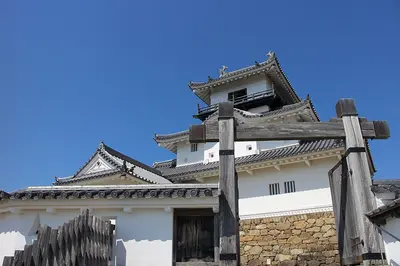
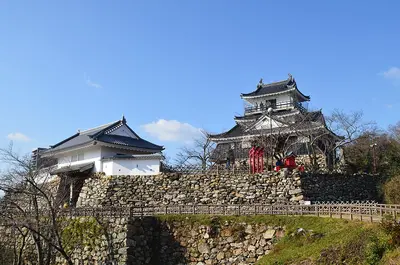
Sunpu Castle

駿府城·Sunpu-jo

D Tourism Score 55/100
C Defense Score 63/100

The castle that bookended Tokugawa Ieyasu's life — hostage child at one end, retired shogun who still ran Japan at the other.

#41 — 100 Famous Castles Ruins
Sunpu Castle (駿府城)
Photo:by Monado/Wikimedia Commons/CC BY-SA 2.5

Quick Facts

Quick Facts

Admission
¥200

¥50

Hours
09:00 – 16:30

Last entry 16:00

Nearest Station
Shizuoka Station (JR Tokaido Main Line / Tokaido Shinkansen)
Walk from Station
10 min walk
Time Needed
1–1.5 hours

Park grounds free. Building admission: Higashi Gomon & Tatsumi Yagura ¥200, Hitsujisaru Yagura ¥100, Momijiyama Garden ¥150. Combo ticket (all 3): Adult ¥360, Child ¥120.

Defense Overview

Defense Overview

Why Sunpu Castle was hard to attack

This castle is hard to attack because attackers have to work through successive outer spaces before the core instead of getting a direct run at the core.

An attacker would not simply arrive at the center on open flat ground. They would have to cross water barriers or moat lines and face more defensive depth after the first line.

Overall score

63/100

Estimated range

57–69

Confidence

B

Usable estimate with some inference

This is a site-original comparison score for learning and comparison, not a reconstruction of one historical battle.

Radar view

Terrain 10/20 Entrance 11/20 Internal 16/20 Siege 14/20 Oversight 12/20
How this estimate was built+

This estimate combines broad terrain, approach, layout, and route-control signals. It is meant to explain the castle's defensive logic in plain English, not reconstruct a single historical attack.

Terrain Advantage

How much the terrain itself seems to help: height, slope, ridges, cliffs, water edges, and limited approach directions.

10/20

Entrance Defense

How awkward and dangerous the first entry looks: gates, bridge or moat crossings, chokepoints, and forced turns.

11/20

Internal Complexity

How hard it seems to keep pushing after entry: layered baileys, depth, compartmentalization, and repeated defensive lines.

16/20

Siege Endurance

A rough sense of long-hold potential: moats, water access, space, storage plausibility, and defensive staying power.

14/20

Strategic Oversight

How much the castle appears to command nearby roads, plains, rivers, basins, harbors, or town approaches.

12/20
Why Visit

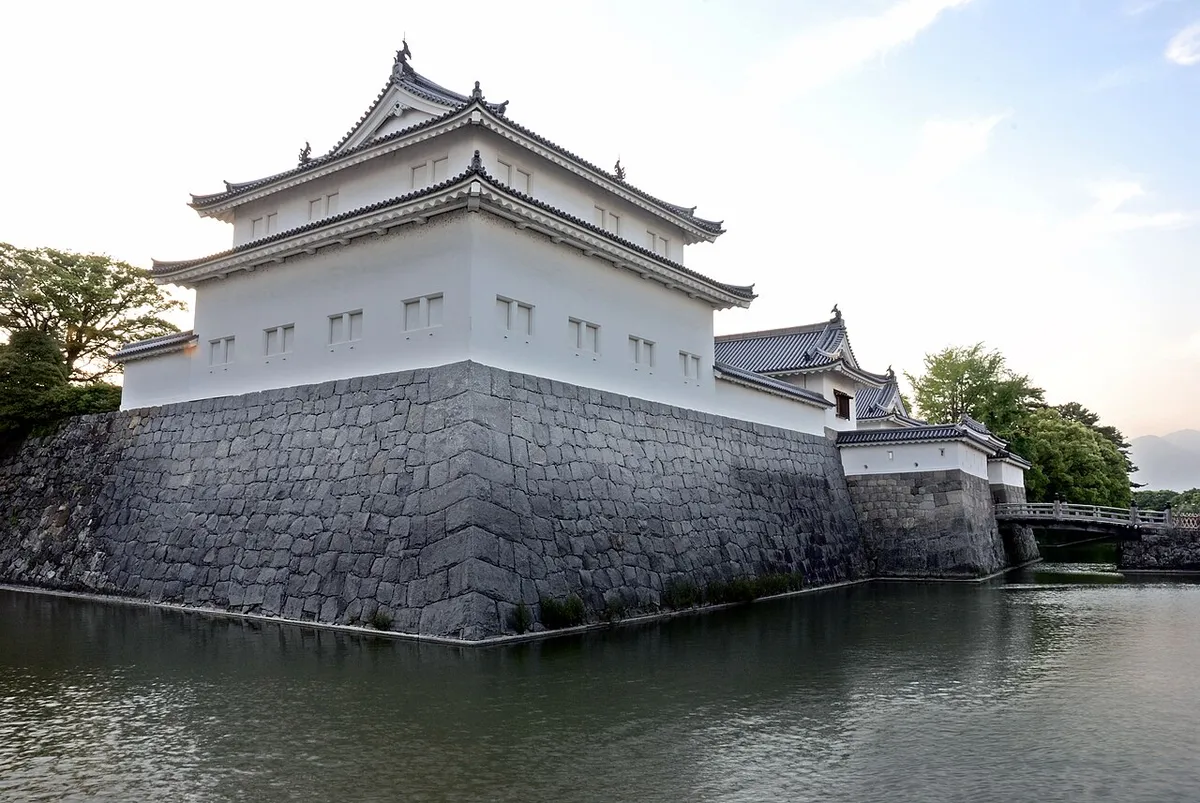
Sunpu Castle Park is a pleasant, easily accessible green space in central Shizuoka, a short walk from the shinkansen station. The surviving moats and stone walls give a genuine sense of the castle's former scale, and the reconstructed turrets provide photogenic interest. The real draw is the Ieyasu connection — the park's atmosphere rewards visitors who know the story of the hostage boy who became shogun and chose this city for his final years. The ongoing archaeological excavation is an unusual bonus. Easy to combine as a stop on a Tokaido shinkansen journey.

Highlights

1

The Bookend of Ieyasu's Life

Sunpu Castle holds a unique place in Tokugawa Ieyasu's biography: he came here first as a child hostage of the Imagawa clan (around age 8–9, 1547), and he came here last as retired shogun (1607–1616). The same castle framed both the powerless beginning and the all-powerful end of Japan's most successful political career. No other castle in Japan has that kind of personal significance to one figure.

2

The Shogun in Retirement (Who Never Really Retired)

Ieyasu formally retired as shogun in 1605, handing the title to his son Hidetada to prove the Tokugawa succession was hereditary. But he moved to Sunpu and ran the country as 'retired shogun' (ogosho) for another 11 years until his death in 1616. The real power never left Sunpu. He directed foreign policy, built alliances, and crushed Osaka — all from this castle.

3

The Ongoing Excavation

Archaeologists are actively excavating beneath Sunpu Castle Park, and visitors can watch the work in progress. They have uncovered extensive stone foundations, artifacts from Ieyasu's era, and evidence of the castle's former scale. The excavation has been running for years and continues to yield discoveries — an unusual opportunity to see castle archaeology in real time.

Structure Details

Visitor tip

Enter the park from any side — it's free and open all day. Walk the inner moat perimeter for the best sense of the castle's scale. The reconstructed Higashi-Otemon gate complex (east gate) is the most photogenic element. The ongoing excavation site is usually viewable and worth finding.

Castle type

Flatland castle

Flatland castle — built on flat terrain in the Shizuoka Plain, relying entirely on multiple moat rings and stone walls for defense

Layout type

Concentric layout

Enclosure style — three concentric rings of moats and stone walls surrounding the inner compound

Main tower

Ruins with partial turret reconstructions — the main tower (tenshu) and most structures were destroyed by fire in 1635. Two turrets (Higashi-Otemon tamon yagura and Tatsumi yagura) were reconstructed in 1998–1999 using traditional wooden techniques based on historical records.

Stone walls

Natural stone stacking

The triple moat ring system partially survives. The inner moat (Uchi-bori) and second moat (Naka-bori) are preserved and filled with water. The outer moat has been filled. The stone walls bordering the inner moat are largely intact and are impressive in scale.

Moats

Triple moat system: inner moat (Uchi-bori), second moat (Naka-bori), and outer moat (Soto-bori, now largely filled). The two surviving water moats give the park its pleasant landscape character and are the most visually significant surviving elements.

Key defensive features

Triple Moat Ring

Sunpu was defended by three concentric rings of water moats — a typical Tokugawa-era flatland castle defense. The inner and second moats survive and are still water-filled today, giving a clear sense of the original defensive depth.

Massive Stone Walls (Ishigaki)

The stone walls bordering the inner moat are substantial in height and well-preserved. They demonstrate the scale of Ieyasu's construction — this was built as the retirement residence of the most powerful man in Japan, and the defenses were proportionate.

The Story of Sunpu Castle

Originally built 1585 / Tokugawa Ieyasu
Current form 1607 / Tokugawa Ieyasu (massively expanded for retirement)
    1547

    Young Tokugawa Ieyasu (then named Matsudaira Takechiyo, about 8–9 years old) is sent as a hostage of the Imagawa clan and lives in Sunpu for about 12 years. The Imagawa control this region and use the child as a political guarantee of the Matsudaira clan's cooperation. Ieyasu receives an education here but lives under others' control.

    1585

    Ieyasu, now a powerful warlord, builds a castle at Sunpu on what may have been an earlier fortification site. He controls the region and begins transforming Sunpu into a proper castle town.

    1590

    Toyotomi Hideyoshi reassigns Ieyasu from his Tokai domain to the Kanto region (centered on Edo). Ieyasu leaves Sunpu — but does not forget it.

    1607

    Having become shogun (1603) and then nominally retired (1605), Ieyasu massively expands Sunpu Castle as his retirement residence. He builds a vast seven-story main tower and transforms Sunpu into effectively the second capital of Japan — it is from here that he continues to direct national policy.

    1616

    Tokugawa Ieyasu dies at Sunpu Castle, aged 73. He had spent his final years here completing Japan's reunification, directing the Osaka campaigns, and codifying the laws that would govern Japan for the next 250 years.

    1635

    The main tower is destroyed by fire and never rebuilt — by 1635, the Tokugawa peace was so secure that rebuilding the tower was considered unnecessary and potentially provocative (under the shogunate's own castle regulations).

    1999

    Reconstruction of the Higashi-Otemon gate and two turrets completed using traditional wooden techniques. Archaeological excavation of the main compound begins and continues to the present day.

In Pop Culture

TV

Aoi Tokugawa Sandai (NHK Taiga Drama, 2000)

This NHK drama about the first three Tokugawa shoguns extensively features Sunpu Castle and Ieyasu's retirement years, driving tourism to Shizuoka.

TV

Dobutsu no Kuni (various Ieyasu dramas)

Sunpu appears regularly in NHK and commercial broadcast dramas about Tokugawa Ieyasu, cementing its association with his legacy.

Did You Know?

  • Ieyasu came to Sunpu twice — first as a powerless child hostage (age ~8, 1547) and last as the most powerful man in Japan (1607–1616). The same city that saw his humiliation also saw his final triumph. No other castle in Japan frames a single life so completely.
  • The seven-story main tower Ieyasu built at Sunpu was reportedly even larger than the main tower at Edo Castle — his 'retirement residence' was arguably grander than the official shogunal seat, a pointed reminder of who actually held power.
  • Ieyasu spent his final years at Sunpu surrounded by scholars and advisors, compiling legal codes, managing foreign trade, and directing policy. He received foreign envoys here, including William Adams (the English navigator who became a samurai adviser), whose influence Ieyasu valued greatly.
  • Ongoing archaeological excavation beneath Sunpu Castle Park has recovered thousands of artifacts from Ieyasu's era, including ceramics, weapons, and architectural materials. The excavation has revised understanding of the castle's original scale and layout.

Score Breakdown

Tourism Score

D 55/100
  • Accessibility 18 /20
  • Foreign-Friendly 10 /20
  • Historical Value 16 /20
  • Visual Impact 6 /20
  • Facilities 5 /20

Defense Score

C 63/100
  • Terrain Advantage 10 /20
  • Entrance Defense 11 /20
  • Internal Complexity 16 /20
  • Siege Endurance 14 /20
  • Strategic Oversight 12 /20

Planning Your Visit

Best Time to Visit

Cherry blossom season (late March to early April) — the inner moat is lined with cherry trees and is one of Shizuoka's most popular hanami spots. Also pleasant in autumn foliage. Accessible year-round.

Time Needed

1–1.5 hours

Insider Tip

Find the active archaeological excavation site within the honmaru — it is not always prominently signposted but is usually viewable through fencing or from viewing platforms. The ongoing dig has been gradually uncovering the tenshu foundation and surrounding structures. Combine with the Shizuoka Sengen Shrine (Fujisan Hongu) about 10 minutes away for a full morning of Ieyasu-era history.

Map

Getting There

Nearest station: Shizuoka Station (JR Tokaido Main Line / Tokaido Shinkansen)
Walk from station: 10 min walk
Parking: Paid parking available near the park. Not recommended; shinkansen access to Shizuoka is very convenient.
Accessible with a JR Pass

Admission

Adult¥200
Child¥50

Park grounds free. Building admission: Higashi Gomon & Tatsumi Yagura ¥200, Hitsujisaru Yagura ¥100, Momijiyama Garden ¥150. Combo ticket (all 3): Adult ¥360, Child ¥120.

Opening Hours

Open09:00 – 16:30
Last entry16:00

Buildings closed Mondays (next day if holiday). Park grounds open 5:30–22:30 year-round.

Facilities

  • – English guides
  • – Audio guide
  • ✓ Wheelchair access
  • ✓ Restrooms
  • – Gift shop
  • ✓ Food nearby

Nearby Castles

Featured in collections

FAQ

Frequently Asked Questions

How do I get to Sunpu Castle?

The nearest station is Shizuoka Station (JR Tokaido Main Line / Tokaido Shinkansen). From there it is about 10 minutes on foot.

How much does Sunpu Castle cost to enter?

Adult admission is ¥200 and child admission is ¥50.

Is Sunpu Castle worth visiting?

Sunpu Castle Park is a pleasant, easily accessible green space in central Shizuoka, a short walk from the shinkansen station. The surviving moats and stone walls give a genuine sense of the castle's former scale, and the reconstructed turrets provide photogenic interest. The real draw is the Ieyasu connection — the park's atmosphere rewards visitors who know the story of the hostage boy who became shogun and chose this city for his final years. The ongoing archaeological excavation is an unusual bonus. Easy to combine as a stop on a Tokaido shinkansen journey.

What are the opening hours of Sunpu Castle?

09:00 to 16:30, last entry 16:00.

How long should I spend at Sunpu Castle?

Plan for about 1–1.5 hours, depending on how closely you want to explore the grounds.