Yoshida Castle

吉田城·Yoshida-jo

F Tourism Score 38/100
C Defense Score 61/100

Ieyasu's riverside checkpoint castle — the fortress that guarded the Tokaido's most important river crossing, now a pleasant park above the Toyokawa.

#151 — Continued 100 Castles Ruins
Yoshida Castle (吉田城)
Photo:Lombroso/Wikimedia Commons/Public domain

Quick Facts

Quick Facts

Admission
Free Free
Hours
09:00 – 17:00

Last entry 16:30

Nearest Station
Toyohashi Station (JR Tokaido Main Line / Shinkansen Kodama)
Walk from Station
20 min walk

Bus also available

Time Needed
45 minutes to 1 hour

Free access to the castle park and surviving stone walls. The reconstructed turret (tamon-yagura) interior is also free to enter.

Defense Overview

Defense Overview

Why Yoshida Castle was hard to attack

This castle is hard to attack because attackers have to work across water barriers before pressing inward instead of getting a direct run at the core.

An attacker would not simply arrive at the center on open flat ground. They would have to cross water barriers or moat lines and push through successive outer areas before the core.

Overall score

61/100

Estimated range

55–67

Confidence

B

Usable estimate with some inference

This is a site-original comparison score for learning and comparison, not a reconstruction of one historical battle.

Radar view

Terrain 10/20 Entrance 11/20 Internal 15/20 Siege 14/20 Oversight 11/20
How this estimate was built+

This estimate combines broad terrain, approach, layout, and route-control signals. It is meant to explain the castle's defensive logic in plain English, not reconstruct a single historical attack.

Terrain Advantage

How much the terrain itself seems to help: height, slope, ridges, cliffs, water edges, and limited approach directions.

10/20

Entrance Defense

How awkward and dangerous the first entry looks: gates, bridge or moat crossings, chokepoints, and forced turns.

11/20

Internal Complexity

How hard it seems to keep pushing after entry: layered baileys, depth, compartmentalization, and repeated defensive lines.

15/20

Siege Endurance

A rough sense of long-hold potential: moats, water access, space, storage plausibility, and defensive staying power.

14/20

Strategic Oversight

How much the castle appears to command nearby roads, plains, rivers, basins, harbors, or town approaches.

11/20

Why Visit

Yoshida Castle is a low-key stop for Sengoku history enthusiasts traveling the Tokaido corridor. The riverside setting is genuinely attractive, the surviving stone walls impressive, and the castle's connection to the Mikawa domain's formative years (Ieyasu, Sakai Tadatsugu, Nagashino) gives it historical depth beyond its modest physical remains. Conveniently accessed from Toyohashi Station on the Shinkansen Kodama service.

Highlights

1

The Castle Nobunaga Never Finished — Ieyasu Did

Yoshida Castle changed hands multiple times during the Sengoku period before Tokugawa Ieyasu took control of the Mikawa region and installed his retainer Sakai Tadatsugu as commander. The castle guarded the critical Tokaido highway crossing of the Toyokawa River — whoever held Yoshida controlled east-west movement in central Honshu.
2

River Fortress on the Toyokawa

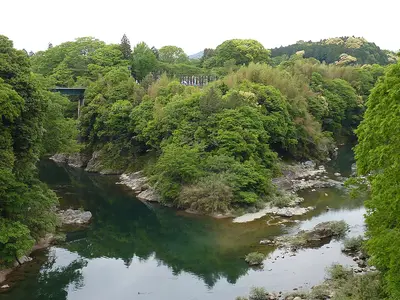
Yoshida Castle sits directly above the Toyokawa River, with the river forming a natural moat on one side. The original castle platform still juts over the modern riverbank in Toyobashi Park — one of the more dramatic surviving castle-location relationships in the Tokai region.

3

An Honest Reconstruction

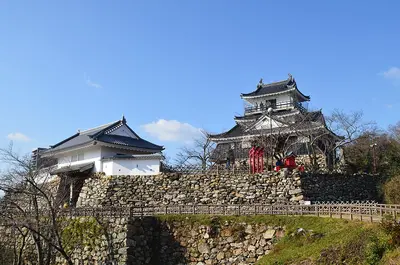
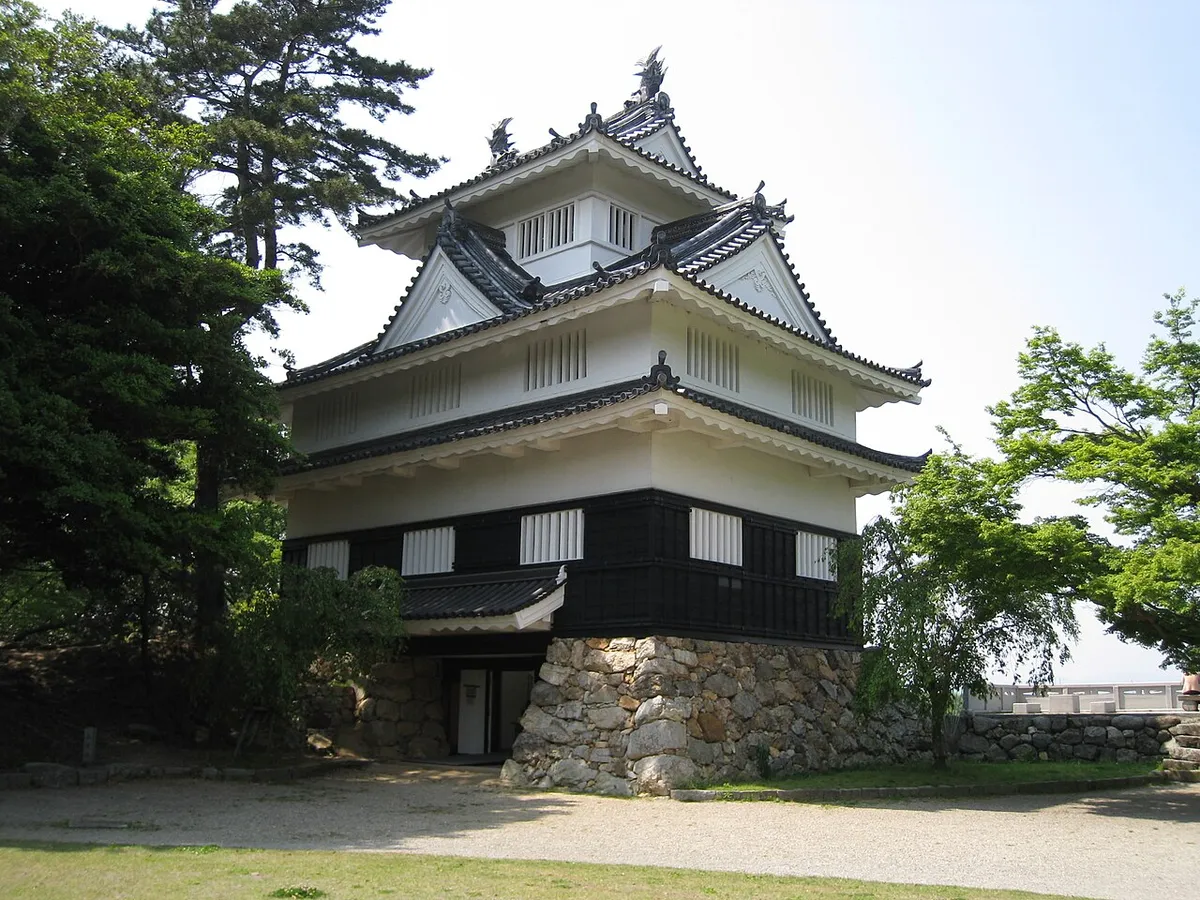
The reconstructed tamon-yagura (long turret) at the site is a smaller-scale structure built on original stone foundations — it represents what the inner compound's connecting turret looked like, not the main tower (which was never reconstructed). This honest partial reconstruction, with the surviving original ishigaki stone walls, gives a realistic sense of the castle's modest but functional character.

Structure Details

Visitor tip

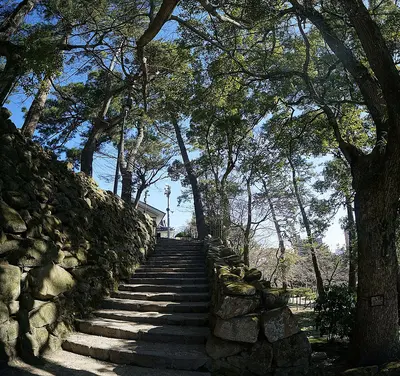
Yoshida Castle today is primarily enjoyed as a pleasant riverside park with historical content rather than a dramatic ruin experience. The reconstructed tamon-yagura gives a photogenic focal point, and the surviving stone walls along the riverside walk are genuinely impressive. The park setting — with the Toyokawa flowing past below — makes the castle's strategic logic immediately apparent.

Castle type

Flatland castle

Flatland castle (built on flat terrain, relying on waterways and earthworks for defense)

Layout type

Concentric layout

Ring-style layout — compounds arranged around a central core

Main tower

Partial reconstruction — tamon-yagura (long turret) reconstructed in 1954; original tenshu never rebuilt. Original stone walls (ishigaki) survive.

Stone walls

Natural stone stacking

The surviving stone walls along the Toyokawa riverside are original construction, presenting a strong riverside face above the river. The reconstructed tamon-yagura sits on original stone foundations within the Honmaru area.

Moats

The Toyokawa River forms the eastern natural water defense. Original dry moat ditches enclosed the other sides of the castle compound — partially visible in the park landscape.

Key defensive features

Toyokawa River Water Defense

The river provided an immediate natural barrier on the eastern and southern faces, eliminating the need for constructed water moats on those sides and concentrating defensive investment on the landward approaches.

River Crossing Control

The castle's position directly above the primary Tokaido river crossing meant that no army could cross the Toyokawa at this point without engaging the castle — a strategic chokepoint function rather than a purely defensive one.

The Story of Yoshida Castle

Originally built 1505 / Makino Kojiro
Current form 1565 / Sakai Tadatsugu (under Tokugawa Ieyasu)
    1505

    Makino Kojiro constructs an initial fortification at the Toyokawa crossing, establishing the strategic position that Yoshida Castle will occupy for the next century of Sengoku warfare.

    1540

    The castle comes under Imagawa clan influence as they extend their control westward through Mikawa Province. The Yoshida crossing becomes a key supply point for Imagawa campaigns toward Owari.

    1565

    Tokugawa Ieyasu, having broken free of Imagawa control after Okehazama (1560), consolidates his hold on Mikawa Province. He installs his general Sakai Tadatsugu as commander of Yoshida and significantly expands the castle. Under Sakai, Yoshida becomes one of the key fortresses of the Tokugawa domain.

    1590

    When Tokugawa Ieyasu is relocated from Mikawa to the Kanto region by Toyotomi Hideyoshi, Yoshida comes under new Toyotomi-aligned lordship. The castle continues to function as a key post-town castle on the Tokaido highway.

    1868

    The Meiji Restoration ends the castle's military function. The structures are gradually demolished. The site becomes a public park. The stone walls and earthworks survive.

    1954

    A tamon-yagura (long corridor turret) is reconstructed on original stone foundations in the Honmaru area, providing a focal structure for the castle park. The reconstruction is based on historical records and drawings.

In Pop Culture

TV

Tokugawa Ieyasu historical dramas

Yoshida Castle and Sakai Tadatsugu appear in historical dramas covering Ieyasu's Mikawa period — particularly the NHK Taiga drama 'Doubutsu Sentai' and dramas covering Ieyasu's consolidation of the Mikawa domain.

Did You Know?

  • The city of Toyohashi (literally 'Toyo Bridge') takes its name from the Toyokawa bridge crossing that Yoshida Castle was built to control — the castle's strategic function is literally encoded in the modern city's name.
  • Sakai Tadatsugu, who commanded Yoshida Castle under Ieyasu, is famous for the Battle of Nagashino (1575) where he led a daring night raid on the Takeda supply depot, contributing to the Oda-Tokugawa victory. The commander of Yoshida Castle played a key role in the battle that effectively ended Takeda military power.
  • The reconstructed tamon-yagura at Yoshida is one of the earliest post-war castle reconstructions in Japan, built in 1954 when enthusiasm for historical restoration was high but strict historical accuracy standards had not yet been widely adopted.

Score Breakdown

Tourism Score

F 38/100
  • Accessibility 10 /20
  • Foreign-Friendly 5 /20
  • Historical Value 10 /20
  • Visual Impact 8 /20
  • Facilities 5 /20

Defense Score

C 61/100
  • Terrain Advantage 10 /20
  • Entrance Defense 11 /20
  • Internal Complexity 15 /20
  • Siege Endurance 14 /20
  • Strategic Oversight 11 /20

Planning Your Visit

Best Time to Visit

Spring for park cherry blossoms (late March to early April) — the riverside parkland setting is particularly attractive in bloom. Pleasant in any season; avoid midsummer heat.

Time Needed

45 minutes to 1 hour

Insider Tip

Walk the stone wall section along the Toyokawa River rather than just photographing the reconstructed turret — the riverside ishigaki gives the most direct physical connection to the original castle. The turret interior has minimal exhibits but the view from the upper level over the river is worth the climb.

Map

Getting There

Nearest station: Toyohashi Station (JR Tokaido Main Line / Shinkansen Kodama)
Walk from station: 20 min walk
Bus: City bus from Toyohashi Station to 'Yoshida-jo Mae' stop.
Parking: Free parking available in the adjacent Toyobashi Park.
Accessible with a JR Pass

Admission

Free

Free access to the castle park and surviving stone walls. The reconstructed turret (tamon-yagura) interior is also free to enter.

Opening Hours

Open09:00 – 17:00
Last entry16:30

The reconstructed turret building is closed on Mondays and over the New Year holiday. The outer park and stone walls are accessible at all times.

Facilities

  • – English guides
  • – Audio guide
  • ✓ Wheelchair access
  • ✓ Restrooms
  • – Gift shop
  • ✓ Food nearby

Nearby Castles

Featured in collections

FAQ

Frequently Asked Questions

How do I get to Yoshida Castle?

The nearest station is Toyohashi Station (JR Tokaido Main Line / Shinkansen Kodama). From there it is about 20 minutes on foot. City bus from Toyohashi Station to 'Yoshida-jo Mae' stop.

How much does Yoshida Castle cost to enter?

Yoshida Castle is free to enter.

Is Yoshida Castle worth visiting?

Yoshida Castle is a low-key stop for Sengoku history enthusiasts traveling the Tokaido corridor. The riverside setting is genuinely attractive, the surviving stone walls impressive, and the castle's connection to the Mikawa domain's formative years (Ieyasu, Sakai Tadatsugu, Nagashino) gives it historical depth beyond its modest physical remains. Conveniently accessed from Toyohashi Station on the Shinkansen Kodama service.

What are the opening hours of Yoshida Castle?

09:00 to 17:00, last entry 16:30.

How long should I spend at Yoshida Castle?

Plan for about 45 minutes to 1 hour, depending on how closely you want to explore the grounds.