Kanagasaki Castle

金ヶ崎城·Kanagasaki-jo

F Tourism Score 35/100
A Defense Score 88/100

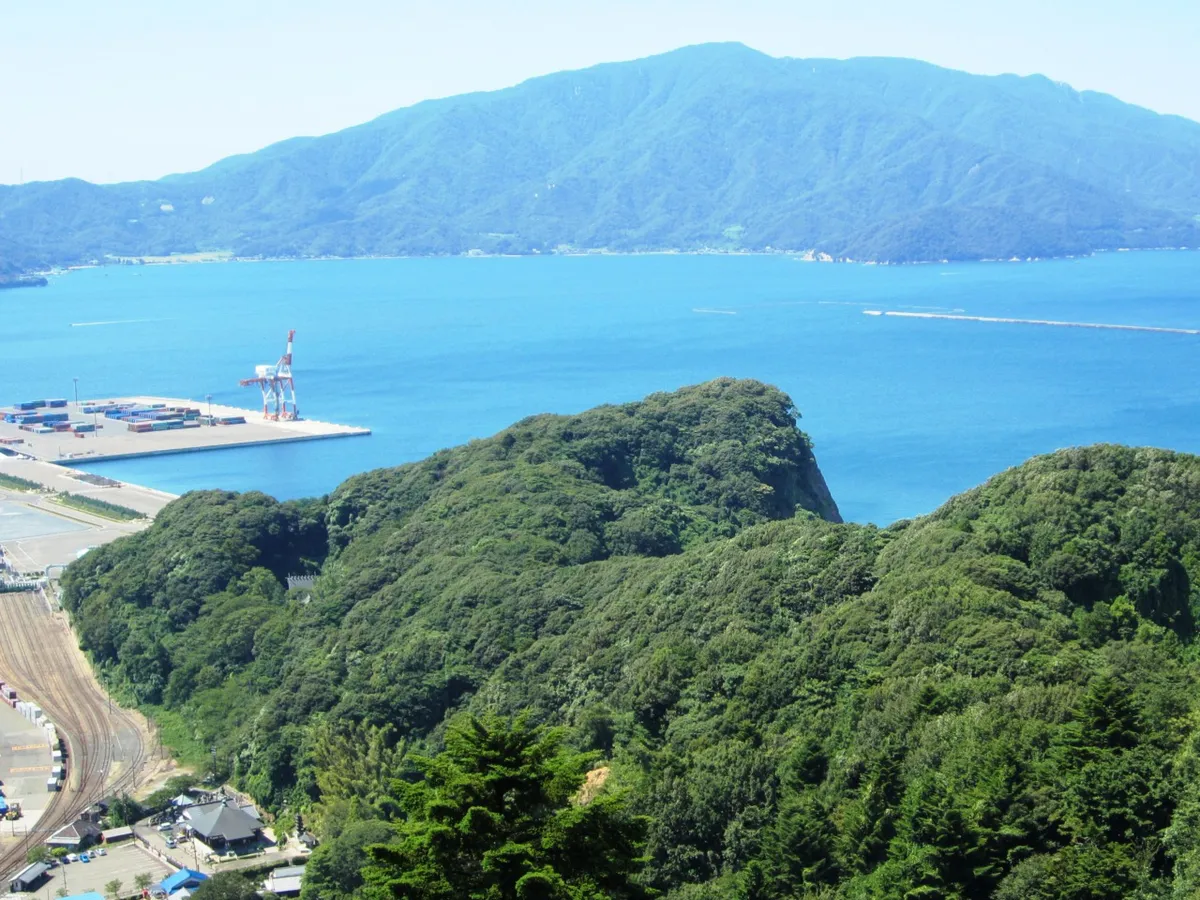
The hilltop where Nobunaga made his most desperate retreat in 1570 — and where Hideyoshi first proved himself as a battlefield commander.

#139 — Continued 100 Castles Ruins
Kanagasaki Castle (金ヶ崎城)
Photo:立花左近/Wikimedia Commons/CC BY-SA 3.0

Quick Facts

Quick Facts

Admission
Free Free
Hours
00:00 – 23:59
Nearest Station
Tsuruga Station (JR Hokuriku Main Line / JR Obama Line)
Walk from Station
30 min walk
Time Needed
1 hour

Free admission. The ruins are a public park and National Historic Site. The hillside is pleasant for walking.

Defense Overview

Defense Overview

Why Kanagasaki Castle was hard to attack

This castle is hard to attack because it combines high ground and difficult natural access with enough defensive depth to slow attackers before the center.

An attacker would first have to fight the site itself before reaching the main defenses. They would have to cross water barriers or moat lines, push through successive outer areas before the core, and do so under a position that also watches the surrounding routes.

Overall score

88/100

Estimated range

82–94

Confidence

B

Usable estimate with some inference

This is a site-original comparison score for learning and comparison, not a reconstruction of one historical battle.

Radar view

Terrain 19/20 Entrance 17/20 Internal 16/20 Siege 16/20 Oversight 20/20
How this estimate was built+

This estimate combines broad terrain, approach, layout, and route-control signals. It is meant to explain the castle's defensive logic in plain English, not reconstruct a single historical attack.

Terrain Advantage

How much the terrain itself seems to help: height, slope, ridges, cliffs, water edges, and limited approach directions.

19/20

Entrance Defense

How awkward and dangerous the first entry looks: gates, bridge or moat crossings, chokepoints, and forced turns.

17/20

Internal Complexity

How hard it seems to keep pushing after entry: layered baileys, depth, compartmentalization, and repeated defensive lines.

16/20

Siege Endurance

A rough sense of long-hold potential: moats, water access, space, storage plausibility, and defensive staying power.

16/20

Strategic Oversight

How much the castle appears to command nearby roads, plains, rivers, basins, harbors, or town approaches.

20/20

Why Visit

Kanagasaki Castle offers a rare combination of genuine historical drama and natural beauty. The Nobunaga retreat story is one of the most compelling episodes of the Sengoku period, and the castle site itself — with its spectacular cherry blossoms in spring and harbor views year-round — is genuinely beautiful. Visit in late March or early April for the cherry blossom experience.

Highlights

1

Nobunaga's Most Desperate Moment

In April 1570, Oda Nobunaga was conducting a campaign against the Asakura clan from Kanagasaki Castle when his brother-in-law, Azai Nagamasa, suddenly betrayed him and joined the enemy. Nobunaga found himself surrounded on three sides with the sea at his back. His escape — organized by Hideyoshi commanding the rear guard while Tokugawa Ieyasu covered another flank — is one of the most famous military retreats in Japanese history. A man who had no margin for error showed, for once, that he was mortal.
2

The Castle That Witnessed a Dynasty's End

Before Nobunaga's famous retreat, Kanagasaki Castle was the site of a tragic episode in 1337: Prince Yoshiaki and his retainers made their final stand here after the collapse of the Southern Court. Surrounded and hopeless, they committed suicide rather than surrender to the Ashikaga forces.

3

Spring Cherry Blossoms Above Tsuruga Bay

Whatever its military history, Kanagasaki Castle hill is today one of the most beautiful cherry blossom sites in Fukui Prefecture. The hillside path up to the ruins passes through a tunnel of flowering cherry trees each spring, and the view from the summit over Tsuruga Bay is spectacular.

Structure Details

Visitor tip

The walk up to the castle summit takes about 15-20 minutes from Kanagasaki Shrine at the base. The path is well-maintained and the cherry tree tunnel in spring is extraordinary. At the summit, interpretive signs explain the Nobunaga retreat story. The view over Tsuruga Bay makes the climb worthwhile at any season.

Castle type

Mountain castle

Mountain castle — compact hilltop fortress above Tsuruga Bay, controlling the port and land routes into the Hokuriku region

Layout type

Linked compound layout

Compound style — main compounds arranged on the hilltop with subsidiary positions on the slopes

Main tower

Ruins — only earthworks and some stone remnants survive; the hill is a park with a shrine and memorial monuments

Stone walls

Natural stone stacking

Kanagasaki Castle's defenses relied primarily on the natural hill terrain rather than sophisticated stonework. Some stone wall remnants survive near the summit compounds, but the castle predates the advanced ishigaki masonry techniques of the late Sengoku period.

Key defensive features

Hilltop Position Above Harbor

The castle sits on a prominence directly above Tsuruga harbor, with commanding views over the bay and all land approaches.

Steep Slopes

The hillsides are steep on multiple sides, requiring attackers to climb under fire for any direct assault.

Harbor Control

Control of Kanagasaki Castle meant control of Tsuruga's harbor — one of the most important ports on the Sea of Japan coast.

The Story of Kanagasaki Castle

Originally built 1337 / Nitta Yoshisada (Southern Court forces)
Current form 1337 / Nitta clan / Southern Court
    1337

    Prince Yoshiaki and his retainers take shelter in Kanagasaki Castle after the collapse of the Southern Court's military position. Surrounded by Ashikaga forces with no hope of relief, the prince and his loyalists commit suicide rather than surrender — one of the great tragic stands of the Nanbokucho civil wars.

    1339

    The castle is held briefly by Nitta Yoshisada as part of continued resistance to Ashikaga authority. Nitta dies in battle the same year.

    1570

    Oda Nobunaga advances to Kanagasaki Castle as part of his campaign against the Asakura clan of Echizen. When word arrives that Azai Nagamasa has broken their alliance, Nobunaga orders a fighting retreat organized by Hideyoshi as rear guard commander — a retreat that saves his life and army.

    1570

    Hideyoshi's rearguard action at Kanagasaki is the battle that first brings him to Nobunaga's direct attention as a military commander of exceptional ability.

    1573

    Nobunaga returns to destroy the Asakura and Azai clans, rendering Kanagasaki Castle strategically irrelevant. The castle is subsequently abandoned.

In Pop Culture

TV

Kirin ga Kuru (NHK Taiga Drama, 2020)

The NHK Taiga Drama focusing on Akechi Mitsuhide depicted the 1570 Kanagasaki retreat — one of the most dramatic moments of Nobunaga's career.

other

Countless Nobunaga and Hideyoshi historical dramas

The Kanagasaki retreat appears in virtually every major Nobunaga or Hideyoshi television drama and historical novel.

Did You Know?

  • Hideyoshi's masterful rearguard action at Kanagasaki in 1570 is credited with saving Nobunaga's life and is considered the battle that launched Hideyoshi's career.
  • The castle's main compound is called Tsukimi-dai (Moon-viewing Platform) — a poetically inappropriate name for a site associated with desperate last stands and military retreats.
  • Tsuruga was one of the most important ports in medieval Japan — goods from the Korean peninsula and China arrived here, were transported overland to Lake Biwa, then shipped to the capital.

Score Breakdown

Tourism Score

F 35/100
  • Accessibility 8 /20
  • Foreign-Friendly 4 /20
  • Historical Value 14 /20
  • Visual Impact 6 /20
  • Facilities 3 /20

Defense Score

A 88/100
  • Terrain Advantage 19 /20
  • Entrance Defense 17 /20
  • Internal Complexity 16 /20
  • Siege Endurance 16 /20
  • Strategic Oversight 20 /20

Planning Your Visit

Best Time to Visit

Late March to early April for the legendary cherry blossoms. The harbor views are attractive in all seasons.

Time Needed

1 hour

Insider Tip

The path up through the cherry blossom tunnel to the summit has a junction — take the left fork to visit Kanagasaki Shrine first, then continue up to the castle ruins and summit viewpoint.

Map

Getting There

Nearest station: Tsuruga Station (JR Hokuriku Main Line / JR Obama Line)
Walk from station: 30 min walk
Parking: Parking available near Kanagasaki Shrine at the base of the hill.
Accessible with a JR Pass

Admission

Free

Free admission. The ruins are a public park and National Historic Site. The hillside is pleasant for walking.

Opening Hours

Open00:00 – 23:59

Open at all times. The cherry blossom festival in spring (late March to early April) is famous — one of the top cherry blossom spots in Fukui Prefecture.

Facilities

  • – English guides
  • – Audio guide
  • – Wheelchair access
  • ✓ Restrooms
  • – Gift shop
  • ✓ Food nearby

Nearby Castles

Featured in collections

FAQ

Frequently Asked Questions

How do I get to Kanagasaki Castle?

The nearest station is Tsuruga Station (JR Hokuriku Main Line / JR Obama Line). From there it is about 30 minutes on foot.

How much does Kanagasaki Castle cost to enter?

Kanagasaki Castle is free to enter.

Is Kanagasaki Castle worth visiting?

Kanagasaki Castle offers a rare combination of genuine historical drama and natural beauty. The Nobunaga retreat story is one of the most compelling episodes of the Sengoku period, and the castle site itself — with its spectacular cherry blossoms in spring and harbor views year-round — is genuinely beautiful. Visit in late March or early April for the cherry blossom experience.

What are the opening hours of Kanagasaki Castle?

00:00 to 23:59.

How long should I spend at Kanagasaki Castle?

Plan for about 1 hour, depending on how closely you want to explore the grounds.