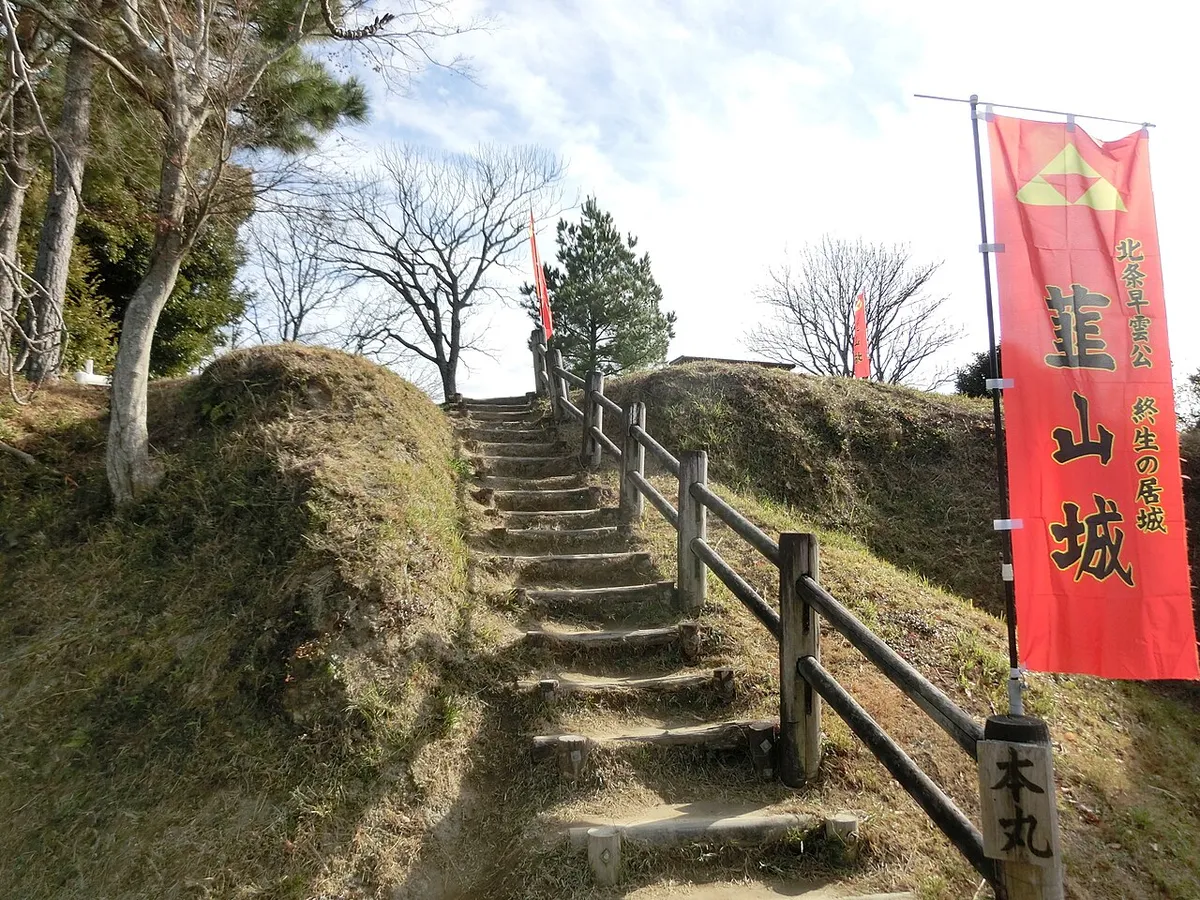
Nirayama Castle

韮山城·Nirayama-jo

F Tourism Score 38/100
A Defense Score 88/100

Where the Later Hojo dynasty began in 1493 and ended in 1590 — the only castle in Japan that bookends an entire century of dynastic power.

#146 — Continued 100 Castles Ruins
Nirayama Castle (韮山城)
Photo:Abasaa/Wikimedia Commons/Public domain

Quick Facts

Quick Facts

Admission
Free Free
Hours
00:00 – 23:59
Nearest Station
Nirayama Station (Izu Hakone Railway Sunzu Line)
Walk from Station
20 min walk
Time Needed
1–1.5 hours (castle ruins + Reverberatory Furnaces combined)

Ruins freely accessible as a public park. The nearby Nirayama Reverberatory Furnaces (UNESCO World Heritage) have a separate admission area. No fee for the castle ruins themselves.

Defense Overview

Defense Overview

Why Nirayama Castle was hard to attack

This castle is hard to attack because it combines high ground and difficult natural access with enough defensive depth to slow attackers before the center.

An attacker would first have to fight the site itself before reaching the main defenses. They would have to cross water barriers or moat lines, approach through at least some constrained entry space, and push through successive outer areas before the core.

Overall score

88/100

Estimated range

82–94

Confidence

B

Usable estimate with some inference

This is a site-original comparison score for learning and comparison, not a reconstruction of one historical battle.

Radar view

Terrain 19/20 Entrance 18/20 Internal 16/20 Siege 16/20 Oversight 19/20
How this estimate was built+

This estimate combines broad terrain, approach, layout, and route-control signals. It is meant to explain the castle's defensive logic in plain English, not reconstruct a single historical attack.

Terrain Advantage

How much the terrain itself seems to help: height, slope, ridges, cliffs, water edges, and limited approach directions.

19/20

Entrance Defense

How awkward and dangerous the first entry looks: gates, bridge or moat crossings, chokepoints, and forced turns.

18/20

Internal Complexity

How hard it seems to keep pushing after entry: layered baileys, depth, compartmentalization, and repeated defensive lines.

16/20

Siege Endurance

A rough sense of long-hold potential: moats, water access, space, storage plausibility, and defensive staying power.

16/20

Strategic Oversight

How much the castle appears to command nearby roads, plains, rivers, basins, harbors, or town approaches.

19/20

Why Visit

Nirayama Castle is modest in physical terms — earthwork ruins on a hill park — but extraordinary in historical significance. The circular story (first castle Hojo Soun seized, last castle to surrender when the Hojo were destroyed) gives it a narrative completeness that most castle sites cannot match. The easy access from Nirayama Station, the free admission, and the proximity to the Nirayama Reverberatory Furnaces (UNESCO World Heritage) make a combined visit very efficient.

Highlights

1

Hojo Soun's Original Base — Where the Hojo Dynasty Began

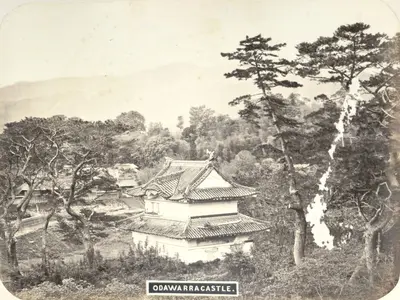
Nirayama Castle is where one of Japan's most consequential samurai dynasties began. Hojo Soun — originally Ise Nagauji, a minor retainer with no land or title — seized Nirayama in 1493 through a combination of political manipulation and military audacity, and used it as the base from which he gradually expanded Hojo power across the Kanto region. Within two generations, his descendants would control the largest territory in eastern Japan from Odawara Castle. Everything the Later Hojo clan achieved started at this modest Izu hill.
2

The Longest Siege of the Sengoku Period

In 1590, Toyotomi Hideyoshi launched his campaign to destroy the Hojo clan. While the main Hojo force was defeated at Odawara, Nirayama Castle — garrisoned by a small force — held out for over 100 days against a besieging army. It was the last Hojo castle to surrender, and its resistance after Odawara had already fallen made Nirayama one of the most tenacious defensive performances of the entire Sengoku period.

3

Where a Century of Hojo Power Was Born and Buried

Nirayama Castle has a uniquely circular historical story: it was the first castle Hojo Soun took in 1493, beginning the dynasty, and it was the last Hojo castle to surrender in 1590, ending the dynasty. Almost exactly 100 years of Hojo power — the most successful daimyo dynasty of eastern Japan — began and ended at this small hill in Izu. No other Japanese castle has this kind of dynastic symmetry.

Structure Details

Visitor tip

Nirayama Castle is an accessible hill park with earthwork ruins — no tower, limited stone work, but pleasant views and a straightforward walk to the summit. The historical significance (birthplace of the Hojo dynasty, last castle to surrender in 1590) is far greater than the visual impact. Combine with the nearby Nirayama Reverberatory Furnaces (a UNESCO World Heritage Site) for a half-day visit covering 400 years of Nirayama history.

Castle type

Mountain castle

Mountain castle — built on a hill above the Kano River plain in Izu Peninsula, using the river and surrounding marshy terrain as natural defensive elements

Layout type

Linked compound layout

Compound style — main compound at hill summit with secondary compounds descending, using the hill's natural contours and the surrounding wet terrain as outer defenses

Main tower

No tower survives. Earthwork platforms and compound layouts are the primary surviving features. The hill is managed as a public park.

Stone walls

Earthen walls

Nirayama Castle's surviving features are primarily earthwork in character — compound platforms, ridge cuts, and the natural contours of the hill have been shaped into defensive positions. The Hojo clan's most sophisticated stone wall construction was developed at their later main castles; Nirayama, as the original base, reflects earlier earthwork traditions.

Moats

The surrounding marshy terrain and the Kano River created effective natural water obstacles on several approaches to the castle hill. The Hojo clan enhanced these natural wet zones to extend the castle's water barrier coverage, creating a combination of river, marsh, and hill defense that made direct assault extremely costly.

Key defensive features

Kano River and Marshy Terrain Water Defense

The castle hill sits within a landscape of rivers and marshy ground that created natural water obstacles on multiple approaches. The Hojo clan manipulated drainage and natural flooding to extend these obstacles, making the castle hill functionally an island in wet conditions — a defensive characteristic that contributed to the extraordinary 100-day resistance in 1590.

Izu Peninsula Chokepoint Position

Nirayama sits at a strategic position on the Izu Peninsula — the gateway from the peninsula into the Kanto plain. Controlling Nirayama meant controlling access to and from Izu, making the castle strategically valuable beyond its modest size.

Hill Elevation Above the River Plain

The castle hill rises clearly above the surrounding Kano River plain, providing excellent observation and defensive elevation relative to the flat terrain. Any approaching force on the plain was visible and exposed while the defenders had the advantage of height.

The Story of Nirayama Castle

Originally built 1493 / Hojo Soun (Ise Nagauji)
Current form 1560 / Later Hojo clan (expanded form)
    1493

    Ise Nagauji — later known as Hojo Soun, the founder of the Later Hojo dynasty — seizes Nirayama Castle. This act of seizure, from a starting position of a minor retainer with no land or title, begins one of the most dramatic clan rises in Japanese history. Nirayama is the first stone in the Hojo foundation.

    1495

    Hojo Soun uses Nirayama as his base to capture Odawara Castle — the castle that will eventually become the Hojo clan's great stronghold. The Nirayama-to-Odawara expansion establishes the pattern of Hojo territorial growth: strategic patience, careful military preparation, and decisive action at the right moment.

    1530

    The Hojo clan's center of gravity has fully shifted to Odawara. Nirayama continues as an important secondary castle for managing the Izu Peninsula, securing the Hojo southern flank.

    1560

    The Later Hojo clan at the height of their power under Hojo Ujiyasu expands and strengthens Nirayama Castle. The castle's earthwork and water defense systems are developed to their final form.

    1590

    Toyotomi Hideyoshi's massive campaign against the Hojo clan reduces Odawara Castle after a 100-day siege. Nirayama Castle — the original Hojo stronghold — refuses to surrender even after Odawara falls. The Nirayama garrison fights on for over 100 days total, making it the last Hojo castle to capitulate. When it finally surrenders, the Hojo chapter is completely closed.

    1590

    Following the Hojo defeat, Tokugawa forces manage the transition of the former Hojo territories. With the construction of better-positioned lowland administrative centers, Nirayama Castle is gradually abandoned.

    1853

    In a curious historical echo, Nirayama becomes important again: Egawa Hidetatsu constructs the Nirayama Reverberatory Furnaces near the castle site to cast cannon in response to Commodore Perry's arrival. The furnaces — now a UNESCO World Heritage component — represent Japan's first modern iron-casting technology, built next to the ruins of the oldest Hojo fortress.

In Pop Culture

other

Various Hojo clan historical dramas and novels

Nirayama appears in historical fiction and drama covering the Later Hojo clan — frequently as the symbolic origin point from which Hojo Soun's extraordinary career began.

TV

NHK taiga dramas covering Toyotomi Hideyoshi's Odawara campaign

Nirayama Castle's extraordinary 100-day resistance after Odawara's fall appears in NHK historical dramas covering the completion of Hideyoshi's unification campaigns.

Did You Know?

  • Hojo Soun's seizure of Nirayama in 1493 is one of the most analyzed acts of gekokujo (lower overcoming higher) in Japanese history. He had no legitimate claim to the castle, no inherited position, and no family name of consequence — 'Hojo' was a name he adopted later, after the famous Kamakura-period Hojo regents, to give his family historical legitimacy. Starting from nothing, he created a dynasty that governed the Kanto for 100 years. Nirayama Castle is where that extraordinary story began.
  • The Nirayama Reverberatory Furnaces built near the castle ruins in 1853 are part of the UNESCO World Heritage Site 'Sites of Japan's Meiji Industrial Revolution.' The juxtaposition of a 15th-century samurai castle and a 19th-century industrial heritage site at the same location is unusual even by Japanese standards. Both were built in response to perceived external threats.
  • The 100-day resistance of Nirayama Castle after Odawara's fall in 1590 is often forgotten in the popular narrative of the Hojo defeat, which focuses on the dramatic Odawara siege. But Nirayama's continued resistance after the main Hojo forces had surrendered represents a remarkable act of garrison loyalty — the defenders held out for over three months after the cause was completely lost, in a hopeless final commitment to the family's original home.

Score Breakdown

Tourism Score

F 38/100
  • Accessibility 9 /20
  • Foreign-Friendly 6 /20
  • Historical Value 14 /20
  • Visual Impact 5 /20
  • Facilities 4 /20

Defense Score

A 88/100
  • Terrain Advantage 19 /20
  • Entrance Defense 18 /20
  • Internal Complexity 16 /20
  • Siege Endurance 16 /20
  • Strategic Oversight 19 /20

Planning Your Visit

Best Time to Visit

Year-round. Cherry blossom season (late March–April) for the hill park's trees. Avoid the peak summer humidity. Autumn is pleasant.

Time Needed

1–1.5 hours (castle ruins + Reverberatory Furnaces combined)

Insider Tip

Combine the castle ruins with the Nirayama Reverberatory Furnaces immediately nearby — the furnaces are genuinely interesting as Japan's first successful iron-casting operation for cannon, and the UNESCO designation makes them more significant than they might appear. The combined visit gives you 400 years of Nirayama history in a single half-day: the 15th-century beginning of the Hojo dynasty, and the 19th-century beginning of Japan's industrial modernization, at the same location.

Map

Getting There

Nearest station: Nirayama Station (Izu Hakone Railway Sunzu Line)
Walk from station: 20 min walk
Parking: Parking available near the castle hill base. The Reverberatory Furnaces visitor area also has parking if visiting both sites.

Admission

Free

Ruins freely accessible as a public park. The nearby Nirayama Reverberatory Furnaces (UNESCO World Heritage) have a separate admission area. No fee for the castle ruins themselves.

Opening Hours

Open00:00 – 23:59

Open year-round. The ruins are an accessible hill park — no seasonal closures.

Facilities

  • – English guides
  • – Audio guide
  • – Wheelchair access
  • ✓ Restrooms
  • – Gift shop
  • ✓ Food nearby

Nearby Castles

Featured in collections

FAQ

Frequently Asked Questions

How do I get to Nirayama Castle?

The nearest station is Nirayama Station (Izu Hakone Railway Sunzu Line). From there it is about 20 minutes on foot.

How much does Nirayama Castle cost to enter?

Nirayama Castle is free to enter.

Is Nirayama Castle worth visiting?

Nirayama Castle is modest in physical terms — earthwork ruins on a hill park — but extraordinary in historical significance. The circular story (first castle Hojo Soun seized, last castle to surrender when the Hojo were destroyed) gives it a narrative completeness that most castle sites cannot match. The easy access from Nirayama Station, the free admission, and the proximity to the Nirayama Reverberatory Furnaces (UNESCO World Heritage) make a combined visit very efficient.

What are the opening hours of Nirayama Castle?

00:00 to 23:59.

How long should I spend at Nirayama Castle?

Plan for about 1–1.5 hours (castle ruins + Reverberatory Furnaces combined), depending on how closely you want to explore the grounds.