Obama Castle

小浜城·Obama-jo

F Tourism Score 35/100
C Defense Score 67/100

The sea castle that controlled Kyoto's fish supply — perched on a Wakasa Bay promontory with rivers and sea as moats, and stone walls that never got their tower.

#128 — Continued 100 Castles Ruins
Obama Castle (小浜城)
Photo:ddsg/Wikimedia Commons/Public domain

Quick Facts

Quick Facts

Admission
Free Free
Hours
00:00 – 23:59
Nearest Station
Obama Station (JR Obama Line from Higashi-Maizuru or Tsuruga)
Walk from Station
20 min walk

Bus also available

Time Needed
1 hour (castle) + half-day for town exploration

Castle ruins are free. The nearby Obama City Museum charges a small admission for special exhibits.

Defense Overview

Defense Overview

Why Obama Castle was hard to attack

This castle is hard to attack because it combines managed outer defenses on relatively level ground with enough defensive depth to slow attackers before the center.

An attacker would not simply arrive at the center on open flat ground. They would have to cross water barriers or moat lines, push through successive outer areas before the core, and do so under a position that also watches the surrounding routes.

Overall score

67/100

Estimated range

61–73

Confidence

B

Usable estimate with some inference

This is a site-original comparison score for learning and comparison, not a reconstruction of one historical battle.

Radar view

Terrain 10/20 Entrance 11/20 Internal 16/20 Siege 16/20 Oversight 14/20
How this estimate was built+

This estimate combines broad terrain, approach, layout, and route-control signals. It is meant to explain the castle's defensive logic in plain English, not reconstruct a single historical attack.

Terrain Advantage

How much the terrain itself seems to help: height, slope, ridges, cliffs, water edges, and limited approach directions.

10/20

Entrance Defense

How awkward and dangerous the first entry looks: gates, bridge or moat crossings, chokepoints, and forced turns.

11/20

Internal Complexity

How hard it seems to keep pushing after entry: layered baileys, depth, compartmentalization, and repeated defensive lines.

16/20

Siege Endurance

A rough sense of long-hold potential: moats, water access, space, storage plausibility, and defensive staying power.

16/20

Strategic Oversight

How much the castle appears to command nearby roads, plains, rivers, basins, harbors, or town approaches.

14/20

Why Visit

Obama Castle combines coastal scenery, good surviving stone walls, and rich cultural context (the Mackerel Road, Buddhist temples, sabazushi). The town itself is a gem — 30+ Buddhist temples, the historic Mackerel Road trail, and excellent seafood make Obama a worthwhile destination.

Highlights

1

The Sea Castle of Wakasa Bay — Built on the Water's Edge

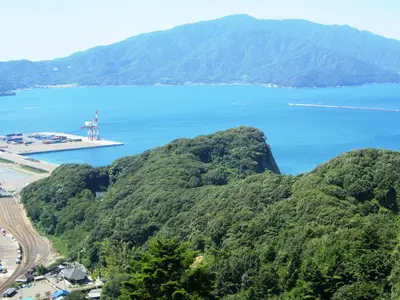
Obama Castle was built directly on a promontory extending into the sea at the head of Wakasa Bay — one of the very few Japanese castles constructed with water on three sides. The Sakai clan built the castle using the Minato and Kita rivers and the sea itself as its moats. The castle was nicknamed 'Unryu-jo' (Cloud Dragon Castle) for its dramatic position above the sea.
2

The Sakai Clan — Purveyors of Kyoto's Seafood

Obama was the most important port for supplying Kyoto with fresh seafood from the Sea of Japan — a trade route called the 'Mackerel Road' (Saba Kaido) that brought fish from Obama to the capital in a single day's carry. Obama's famous mackerel sushi (sabazushi) is a direct legacy of this historical seafood trade.

3

Surviving Stone Walls and Turret Foundations

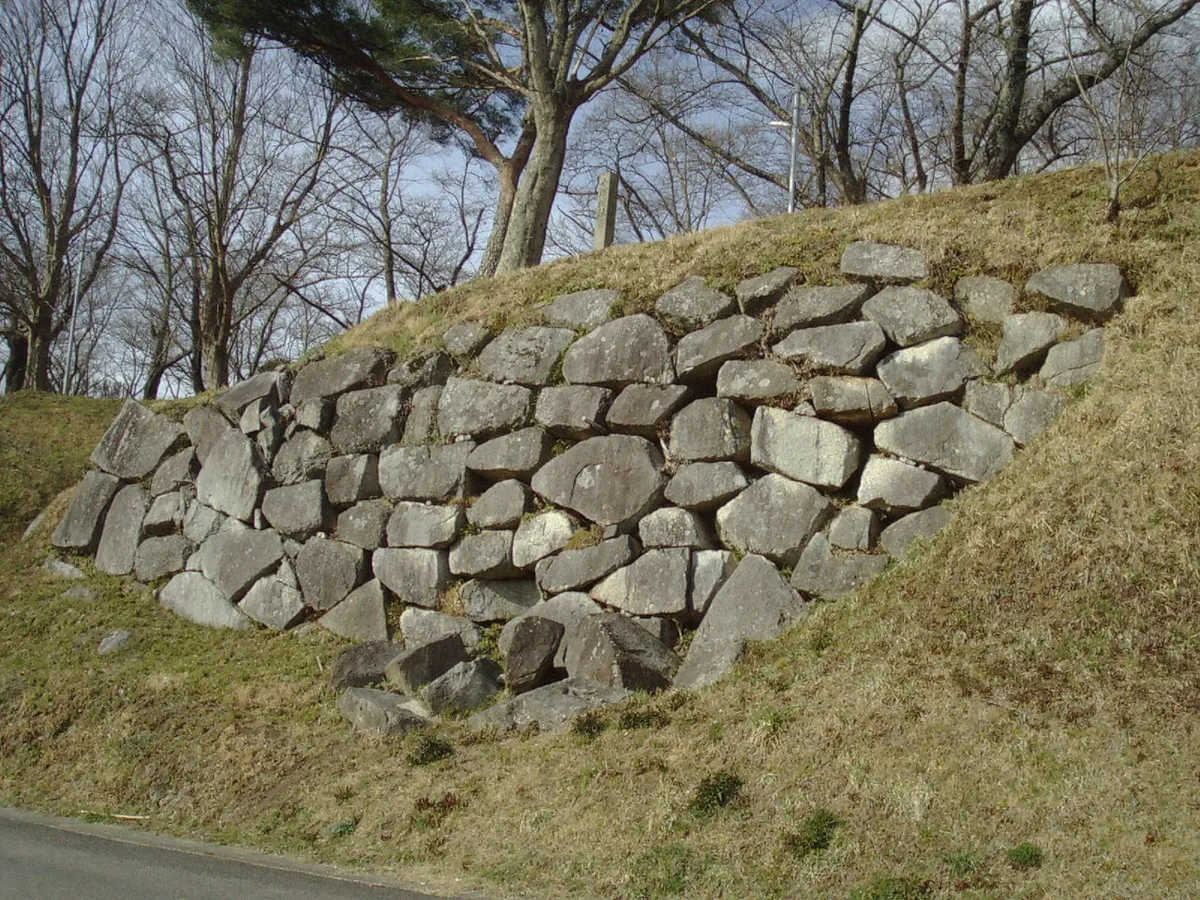
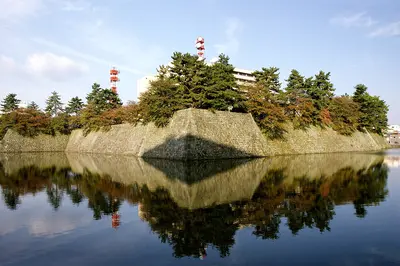
Despite the demolition of all wooden structures, Obama Castle retains impressive stone walls (ishigaki) and the foundations of multiple turrets around the former main compound. The stone walls extending to the water's edge are particularly evocative.

Structure Details

Visitor tip

Walk to the honmaru area to see the surviving ishigaki stone walls. The sea views from the stone walls give a sense of the castle's dramatic coastal position. Combine with Obama's historic temple district and the mackerel sushi (sabazushi) lunch.

Castle type

Flatland castle

Flatland coastal castle (built on a promontory between two rivers and the sea — a suijojo 'water castle' with sea and river moats on three sides)

Layout type

Linked compound layout

Compound style — inner and outer compounds on the sea promontory

Main tower

No tenshu survives — the main tower was never completed. The castle's stone walls (ishigaki) and turret foundations survive in good condition.

Stone walls

Natural stone stacking

The surviving stone walls at Obama Castle are among the best-preserved coastal castle ishigaki in the Hokuriku region. The walls extend around the main compound and to the water's edge.

Moats

Sea and river moats on three sides — the Minato River (north), Kita River (east), and Wakasa Bay (south/west). The coastal promontory position made the castle nearly impregnable from seaward approaches.

Key defensive features

Sea and River Moats — Three-Sided Water Defense

The promontory position with sea on the south and rivers on north and east created a nearly impregnable water defense. Only the western approach from the castle town required constructed moats.

Wakasa Bay Port Control

The castle's coastal position allowed it to control maritime access to Wakasa Bay — the most important Sea of Japan port for the Kyoto supply route.

The Story of Obama Castle

Originally built 1601 / Kyogoku Takatsugu
Current form 1634 / Sakai Tadakatsu
    1601

    Kyogoku Takatsugu, rewarded for his role at the Battle of Sekigahara, begins constructing Obama Castle on the sea promontory. Construction of the main tower is attempted but never completed.

    1634

    The Sakai clan receives Obama domain — a family that will hold the castle for the remainder of the Edo period.

    1700

    Obama is at the height of its economic importance as the supply port for Kyoto's seafood via the 'Mackerel Road' (Saba Kaido).

    1873

    Meiji land reform sees Obama Castle's wooden structures demolished. The stone walls are largely preserved.

Did You Know?

  • Obama City shares its name with the 44th President of the United States — when Barack Obama was elected in 2008, the small Fukui fishing town briefly became internationally famous.
  • The main tower of Obama Castle was never completed — the castle operated through the Edo period with impressive stone walls but no central tower.
  • The 'Mackerel Road' (Saba Kaido) from Obama to Kyoto was one of the most important food supply routes in medieval and early modern Japan. Obama's sabazushi (mackerel sushi) is a direct culinary legacy.
  • Obama has over 30 Buddhist temples for a small town — earning it the nickname 'Little Nara.' Several date to the Nara and Heian periods.

Score Breakdown

Tourism Score

F 35/100
  • Accessibility 10 /20
  • Foreign-Friendly 6 /20
  • Historical Value 9 /20
  • Visual Impact 6 /20
  • Facilities 4 /20

Defense Score

C 67/100
  • Terrain Advantage 10 /20
  • Entrance Defense 11 /20
  • Internal Complexity 16 /20
  • Siege Endurance 16 /20
  • Strategic Oversight 14 /20

Planning Your Visit

Best Time to Visit

Spring and autumn for comfortable weather. Summer for Sea of Japan coastal atmosphere.

Time Needed

1 hour (castle) + half-day for town exploration

Insider Tip

Obama is seriously undervisited relative to its historical and cultural wealth. Rent a bicycle from the station for the most enjoyable way to connect the sites.

Map

Getting There

Nearest station: Obama Station (JR Obama Line from Higashi-Maizuru or Tsuruga)
Walk from station: 20 min walk
Bus: Bus or bicycle from Obama Station. Bicycle rental recommended.
Parking: Free parking near the castle site.
Accessible with a JR Pass

Admission

Free

Castle ruins are free. The nearby Obama City Museum charges a small admission for special exhibits.

Opening Hours

Open00:00 – 23:59

Open at all times. Heavy snowfall possible in winter.

Facilities

  • – English guides
  • – Audio guide
  • ✓ Wheelchair access
  • ✓ Restrooms
  • – Gift shop
  • ✓ Food nearby

Nearby Castles

Featured in collections

FAQ

Frequently Asked Questions

How do I get to Obama Castle?

The nearest station is Obama Station (JR Obama Line from Higashi-Maizuru or Tsuruga). From there it is about 20 minutes on foot. Bus or bicycle from Obama Station. Bicycle rental recommended.

How much does Obama Castle cost to enter?

Obama Castle is free to enter.

Is Obama Castle worth visiting?

Obama Castle combines coastal scenery, good surviving stone walls, and rich cultural context (the Mackerel Road, Buddhist temples, sabazushi). The town itself is a gem — 30+ Buddhist temples, the historic Mackerel Road trail, and excellent seafood make Obama a worthwhile destination.

What are the opening hours of Obama Castle?

00:00 to 23:59.

How long should I spend at Obama Castle?

Plan for about 1 hour (castle) + half-day for town exploration, depending on how closely you want to explore the grounds.