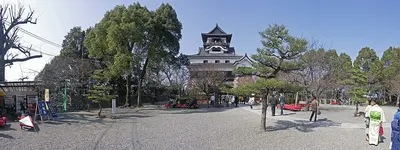
Asuke Castle

足助城·Asuke-jo

D Tourism Score 45/100
A Defense Score 87/100

Japan's best wooden mountain castle reconstruction — compact, authentic, and dramatically positioned above Korankei Gorge's famous autumn maple forest.

#152 — Continued 100 Castles Reconstructed
Asuke Castle (足助城)
Photo:小池 隆/Wikimedia Commons/CC BY 3.0

Quick Facts

Quick Facts

Admission
¥300

¥0

Hours
09:00 – 16:30

Last entry 16:00

Nearest Station
Meitetsu Toyota-shi Station (Meitetsu Toyota Line / Aichi Loop Railway), then bus to Asuke (approx. 40 minutes by bus)
Walk from Station
10 min walk

Bus also available

Time Needed
2–3 hours (castle + gorge walk)

Children (junior high and under) free. High school students ¥100.

Defense Overview

Defense Overview

Why Asuke Castle was hard to attack

This castle is hard to attack because it combines high ground and difficult natural access with a controlled route inward.

An attacker would first have to fight the site itself before reaching the main defenses. They would have to cross water barriers or moat lines and face more defensive depth after the first line.

Overall score

87/100

Estimated range

81–93

Confidence

A

Strong multi-source support

This is a site-original comparison score for learning and comparison, not a reconstruction of one historical battle.

Radar view

Terrain 19/20 Entrance 17/20 Internal 17/20 Siege 16/20 Oversight 18/20
How this estimate was built+

This estimate combines broad terrain, approach, layout, and route-control signals. It is meant to explain the castle's defensive logic in plain English, not reconstruct a single historical attack.

Terrain Advantage

How much the terrain itself seems to help: height, slope, ridges, cliffs, water edges, and limited approach directions.

19/20

Entrance Defense

How awkward and dangerous the first entry looks: gates, bridge or moat crossings, chokepoints, and forced turns.

17/20

Internal Complexity

How hard it seems to keep pushing after entry: layered baileys, depth, compartmentalization, and repeated defensive lines.

17/20

Siege Endurance

A rough sense of long-hold potential: moats, water access, space, storage plausibility, and defensive staying power.

16/20

Strategic Oversight

How much the castle appears to command nearby roads, plains, rivers, basins, harbors, or town approaches.

18/20

Why Visit

Asuke Castle is the best place in Japan to experience what a Sengoku-era mountain castle actually felt like from the inside. The wooden reconstruction above original stone foundations gives a physical authenticity rare in Japanese castle tourism. Combine with Korankei Gorge for a full day in the Yahagi River valley.

Highlights

1

Japan's Only Fully Reconstructed Wooden Mountain Castle

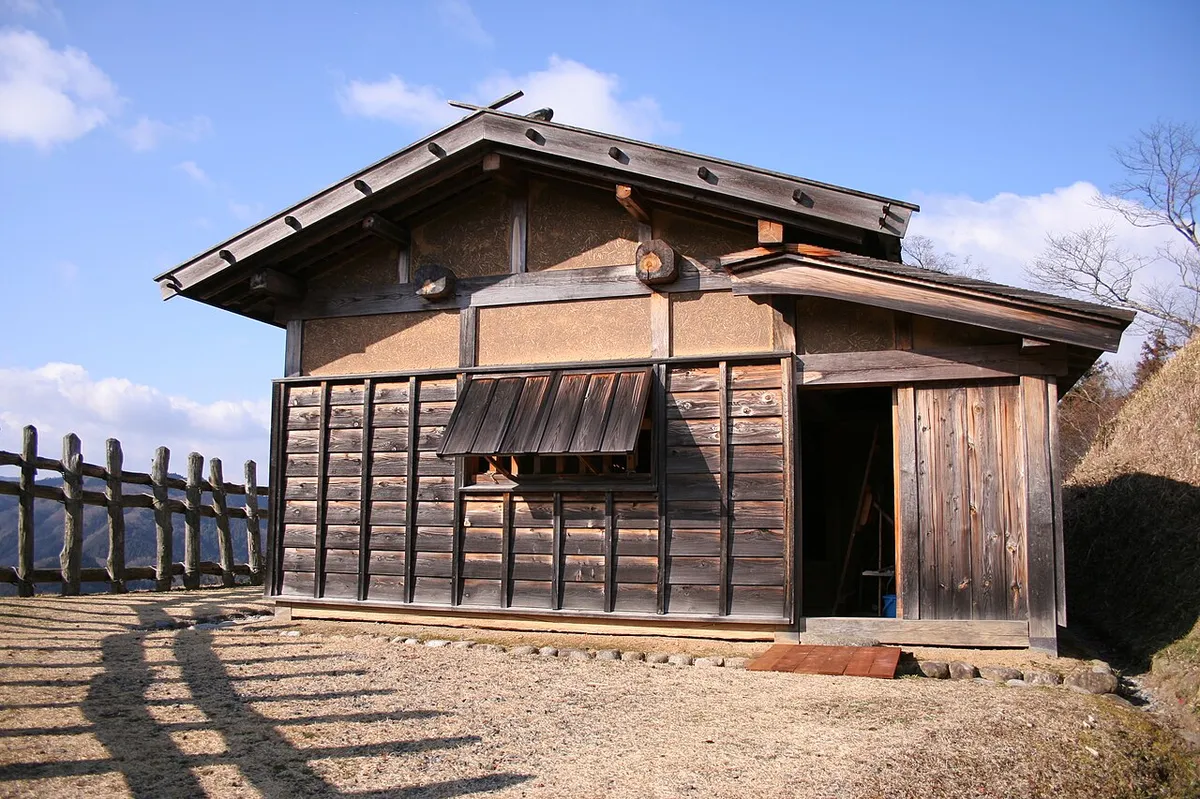
Asuke Castle is one of the rarest castle experiences in Japan: a fully reconstructed mountain castle (yamajiro) with all wooden buildings rebuilt on their original stone foundations. While most 'reconstructed' castles are concrete towers, Asuke Castle reconstructed the entire mountain fortress — main tower, multiple watchtowers, gates, covered corridors, and defensive walls — all in wood, faithfully reproducing the compact yamajiro form of the Sengoku period.
2

The Suganuma Clan's Mountain Stronghold

Asuke Castle was built by the Suganuma clan — a minor Sengoku lord controlling the strategically important Asuke area and the Yahagi River route between the Mikawa coast and Shinano. Caught between the great powers of Takeda, Imagawa, and Tokugawa, the Suganuma managed to survive through careful alliance-making until Tokugawa unification.

3

Autumn Leaves Capital — Korankei Gorge Below

Asuke Castle sits above Korankei Gorge — one of Japan's most celebrated autumn foliage sites, with 4,000 maple trees turning brilliant red and orange in November. The combination of a reconstructed mountain castle above a famous gorge creates one of the most visually distinctive castle settings in Aichi Prefecture.

Structure Details

Visitor tip

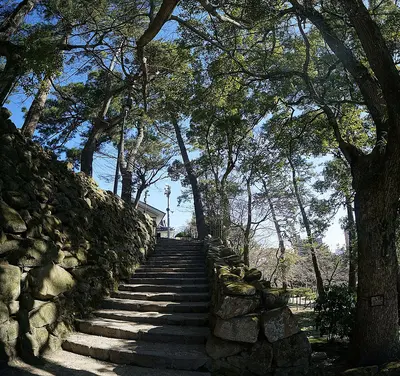
Follow the trail from the ticket gate at the base of the mountain to the summit — allow 15 minutes for the uphill walk. The reconstructed wooden buildings give an excellent feel for a Sengoku mountain fortress. After the castle, walk down to Korankei Gorge for the maple trees.

Castle type

Mountain castle

Mountain castle (built on a steep mountain summit above the Asuke town and Korankei Gorge, with the Yahagi River as a natural moat below)

Layout type

Linked compound layout

Compound style — multiple compounds arranged along the mountain ridge, connected by covered corridors and gates

Main tower

Reconstructed wooden main turret built above original stone foundations. Reconstruction based on archaeological evidence and historical research, completed in 1989.

2 floors

Stone walls

Natural stone stacking

The original stone foundations (ishigaki) survive from the Sengoku-period castle. The wooden superstructures are faithful reconstructions built above these original foundations in 1987–1989.

Key defensive features

Steep Mountain Summit Position

The castle sits on a summit that rises sharply above the town and gorge below. Any attacking force had to climb steep slopes under observation and fire from the castle's watchtowers.

Yahagi River Natural Barrier

The Yahagi River flowing through Korankei Gorge below the castle formed a natural barrier on the western approach.

Ridge Defense Layout

The castle compounds followed the mountain ridge, with watchtowers at each end providing overlapping fields of fire along the approach paths.

The Story of Asuke Castle

Originally built 1400 / Suganuma clan
Current form 1584 / Suganuma Sadamitsu
    1400

    The Suganuma clan constructs a fortification on the mountain summit above the Yahagi River. The castle controls the mountain road between Mikawa and Shinano provinces.

    1584

    The castle reaches its mature form under Suganuma Sadamitsu. With Tokugawa Ieyasu the dominant power in the region after Nagashino, the Suganuma align firmly with Tokugawa.

    1590

    Following Toyotomi Hideyoshi's unification, Tokugawa Ieyasu is relocated to Edo. Asuke Castle is gradually abandoned as the strategic landscape changes.

    1987

    Archaeological excavations reveal the original stone foundations in excellent condition. The decision is made to reconstruct the wooden castle buildings above the original foundations.

    1989

    The reconstructed wooden castle complex opens to the public — one of the very few complete wooden mountain castle reconstructions in Japan.

In Pop Culture

TV

Various NHK historical programs

Asuke Castle is frequently featured in NHK programs about Sengoku-era mountain castle construction, praised as an exemplary wooden reconstruction.

Did You Know?

  • Asuke Castle's wooden reconstruction is unusual in Japanese castle history — most castle reconstructions use reinforced concrete. The decision to use traditional wooden construction above the original stone foundations gives Asuke a tactile authenticity that concrete reconstructions cannot achieve.
  • Korankei Gorge below the castle has 4,000 maple trees — the gorge is one of Aichi Prefecture's most famous autumn foliage sites.
  • The Suganuma clan's survival strategy in the Sengoku period — switching alliances as the great powers competed — is a fascinating example of how minor lords navigated one of Japan's most turbulent eras.
  • The castle is compact enough that the entire defensive layout can be walked in 20–30 minutes — making the mountain climb worthwhile for a complete immersive yamajiro experience.

Score Breakdown

Tourism Score

D 45/100
  • Accessibility 8 /20
  • Foreign-Friendly 6 /20
  • Historical Value 10 /20
  • Visual Impact 12 /20
  • Facilities 9 /20

Defense Score

A 87/100
  • Terrain Advantage 19 /20
  • Entrance Defense 17 /20
  • Internal Complexity 17 /20
  • Siege Endurance 16 /20
  • Strategic Oversight 18 /20

Planning Your Visit

Best Time to Visit

Mid-November for peak autumn foliage at Korankei Gorge. Cherry blossom season (early April) is also beautiful.

Time Needed

2–3 hours (castle + gorge walk)

Insider Tip

Korankei Gorge autumn foliage gets very crowded in peak season — arrive before 9am or after 3pm. The castle itself is much less crowded than the gorge, even on busy days.

Map

Getting There

Nearest station: Meitetsu Toyota-shi Station (Meitetsu Toyota Line / Aichi Loop Railway), then bus to Asuke (approx. 40 minutes by bus)
Walk from station: 10 min walk
Bus: Bus from Toyota-shi Station or highway bus from Nagoya to Asuke area. Car is recommended.
Parking: Paid parking at Korankei Gorge area. Gets congested during autumn foliage season.

Admission

Adult¥300
ChildFree

Children (junior high and under) free. High school students ¥100.

Opening Hours

Open09:00 – 16:30
Last entry16:00

Closed Thursday (next day if Thursday is holiday). Closed December 25–January 5.

Facilities

  • – English guides
  • – Audio guide
  • – Wheelchair access
  • ✓ Restrooms
  • ✓ Gift shop
  • ✓ Food nearby

Nearby Castles

Featured in collections

FAQ

Frequently Asked Questions

How do I get to Asuke Castle?

The nearest station is Meitetsu Toyota-shi Station (Meitetsu Toyota Line / Aichi Loop Railway), then bus to Asuke (approx. 40 minutes by bus). From there it is about 10 minutes on foot. Bus from Toyota-shi Station or highway bus from Nagoya to Asuke area. Car is recommended.

How much does Asuke Castle cost to enter?

Adult admission is ¥300 and child admission is ¥0.

Is Asuke Castle worth visiting?

Asuke Castle is the best place in Japan to experience what a Sengoku-era mountain castle actually felt like from the inside. The wooden reconstruction above original stone foundations gives a physical authenticity rare in Japanese castle tourism. Combine with Korankei Gorge for a full day in the Yahagi River valley.

What are the opening hours of Asuke Castle?

09:00 to 16:30, last entry 16:00.

How long should I spend at Asuke Castle?

Plan for about 2–3 hours (castle + gorge walk), depending on how closely you want to explore the grounds.