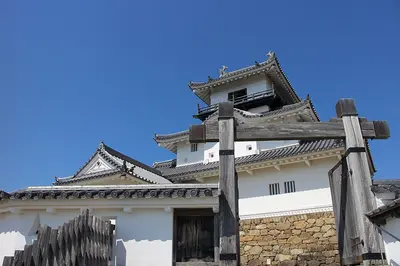
Kokokuji Castle

興国寺城·Kokokuji-jo

F Tourism Score 30/100
B Defense Score 77/100

The obscure first castle of Hojo Soun — where one of Japan's most dramatic feudal dynasties took its very first step in 1487.

#145 — Continued 100 Castles Ruins
Kokokuji Castle (興国寺城)
Photo:SigureU/Wikimedia Commons/CC BY-SA 4.0

Quick Facts

Quick Facts

Admission
Free Free
Hours
00:00 – 23:59
Nearest Station
Hara Station (JR Tokaido Main Line)
Walk from Station
20 min walk
Time Needed
45 minutes–1 hour.

Free admission. The castle ruins are a public park maintained by Numazu City. Open at all times.

Defense Overview

Defense Overview

Why Kokokuji Castle was hard to attack

This castle is hard to attack because it combines a raised core with defended outer space with enough defensive depth to slow attackers before the center.

An attacker would not get a simple direct approach to the center. They would have to cross water barriers or moat lines, approach through at least some constrained entry space, and push through successive outer areas before the core.

Overall score

77/100

Estimated range

71–83

Confidence

B

Usable estimate with some inference

This is a site-original comparison score for learning and comparison, not a reconstruction of one historical battle.

Radar view

Terrain 15/20 Entrance 15/20 Internal 16/20 Siege 15/20 Oversight 16/20
How this estimate was built+

This estimate combines broad terrain, approach, layout, and route-control signals. It is meant to explain the castle's defensive logic in plain English, not reconstruct a single historical attack.

Terrain Advantage

How much the terrain itself seems to help: height, slope, ridges, cliffs, water edges, and limited approach directions.

15/20

Entrance Defense

How awkward and dangerous the first entry looks: gates, bridge or moat crossings, chokepoints, and forced turns.

15/20

Internal Complexity

How hard it seems to keep pushing after entry: layered baileys, depth, compartmentalization, and repeated defensive lines.

16/20

Siege Endurance

A rough sense of long-hold potential: moats, water access, space, storage plausibility, and defensive staying power.

15/20

Strategic Oversight

How much the castle appears to command nearby roads, plains, rivers, basins, harbors, or town approaches.

16/20

Why Visit

Kokokuji Castle is a specialist destination — minimal facilities, earthwork-only ruins, and no structures above ground. The reasons to visit are the extraordinary deep karabori moat (one of the most dramatic earthwork features in the Kanto-Tokai region) and the historical significance as the absolute origin point of the Later Hojo dynasty. Castle enthusiasts completing the continued 100 Famous Castles list and Hojo history devotees will find it satisfying. Casual visitors expecting visual drama will be underwhelmed.

Highlights

1

Where the Hojo Dynasty Was Born — Hojo Soun's First Castle

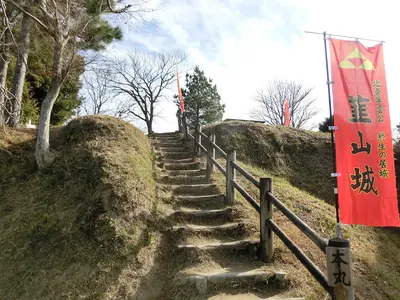
Kokokuji Castle is the first castle Ise Nagauji (later known as Hojo Soun) ever held as his own — the starting point of the Later Hojo dynasty that would go on to govern the entire Kanto region for a century. Before Odawara, before Nirayama, before the Hojo clan even existed, there was Kokokuji: a modest hill castle above the Izu plain where an obscure retainer without land or title first gained a foothold of his own. It is the origin point of one of Japan's most consequential feudal dynasties.
2

Earthwork Engineering at Its Most Ambitious

Despite Kokokuji Castle's modest size, the earthwork construction of its main compound is among the most dramatic surviving examples of Sengoku-period castle engineering in Shizuoka. The honmaru stands on an artificial earthwork platform surrounded by a deep dry moat — estimated at 15 meters deep — cut directly into the surrounding terrain. The scale of excavation required to create this moat is remarkable for a castle of this regional significance.

3

Between Fuji and the Sea — A Strategic Izu Gateway

Kokokuji sits at the western base of the Izu Peninsula, where the mountains of Izu meet the coastal plain near Suruga Bay. The position controls movement between the coast road and the Izu interior, making it strategically important as both a gateway to the Izu Peninsula and a point on the Tokaido coastal route. Mount Fuji is visible to the northwest on clear days — a backdrop that the earthwork ruins can still claim.

Structure Details

Visitor tip

Kokokuji Castle is minimal-facilities ruins — no structures, no museum, just earthworks and a very deep dry moat in a park setting. The primary interest is the extraordinary depth of the karabori (dry moat) and the historical significance as Hojo Soun's first castle. Combine with Nirayama Castle (the second Hojo castle Soun took in 1493) for a 'Hojo origins' half-day. Not recommended as a standalone destination for casual visitors.

Castle type

Hill castle

Hill castle — built on a low ridge above the Kano River estuary plain near Suruga Bay, using artificially excavated earthworks to create dramatic defensive moats in otherwise gentle terrain

Layout type

Linked compound layout

Compound style — main compound at highest point with secondary compounds on the extending ridge, separated by deep dry moats cut into the ridge

Main tower

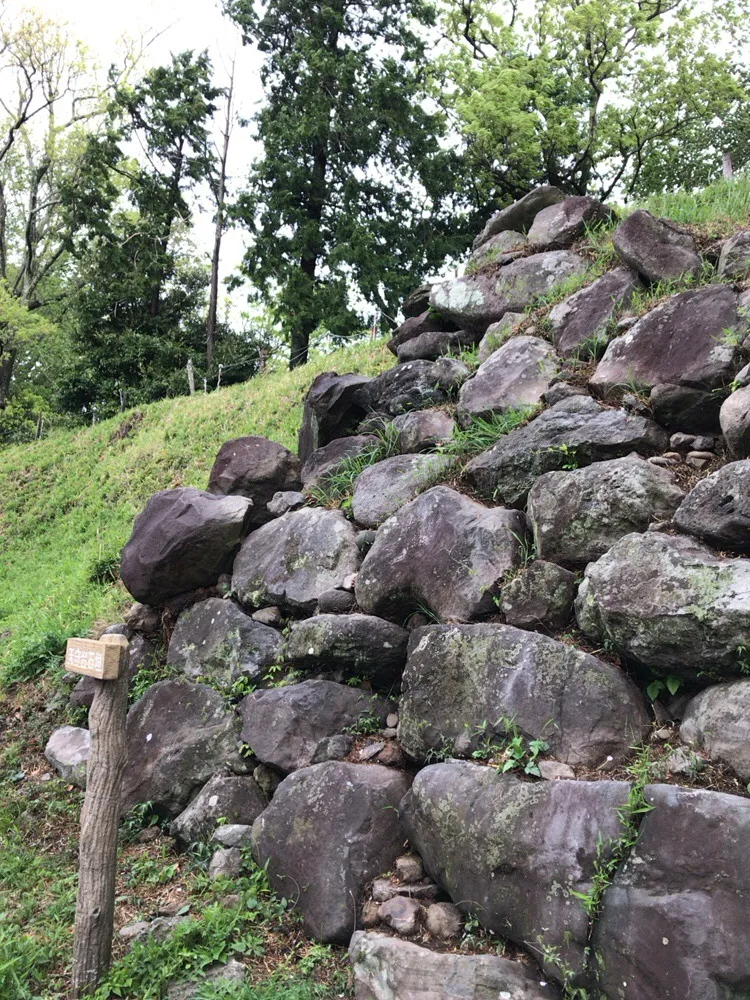
Complete ruins — no structures survive. The primary surviving features are the earthwork platforms of the compounds and the deep dry moats cut between them. The scale of the earthwork construction is the main physical interest.

Stone walls

Earthen walls

Kokokuji's construction is almost entirely earthwork — deep dry moats (karabori) cut between compound platforms are the defining feature. The approximately 15-meter-deep moat surrounding the honmaru platform is extraordinary for a castle of this scale and represents considerable investment in earthwork labor. No significant stone walls survive.

Moats

Deep dry moats (karabori) cut directly into the ridge terrain are the castle's primary defensive feature. The main moat surrounding the honmaru is estimated at approximately 15 meters deep, creating a dramatic vertical barrier between the main compound and any approach. The moats are the most visually impressive surviving feature of the ruins.

Key defensive features

15-Meter Deep Dry Moat (Karabori)

The deep karabori surrounding the honmaru platform is the castle's defining feature — a vertical drop of approximately 15 meters from the honmaru edge to the moat floor. This dry moat was cut from the surrounding terrain rather than filled with water, relying on the sheer depth of the cut to prevent scaling. The scale of excavation is the most remarkable engineering achievement at the site.

Izu Peninsula Gateway Position

Kokokuji's position at the western base of the Izu Peninsula controlled the route between Suruga Bay coast and the Izu interior — a chokepoint that made it militarily valuable to anyone seeking to control the peninsula or use it as a rear base for operations in the Kanto.

The Story of Kokokuji Castle

Originally built 1487 / Ise Nagauji (later Hojo Soun)
Current form 1493 / Ise Nagauji / Hojo Soun
    1487

    Ise Nagauji — an obscure retainer in service to the Imagawa clan of Suruga — is given custody of Kokokuji Castle as reward for helping resolve an Imagawa succession dispute. This is the first land and castle of his own, the beginning of everything. At this point he has no great name, no dynasty, and no territory. Kokokuji is where the Later Hojo story begins.

    1493

    Ise Nagauji uses Kokokuji as his base to move aggressively. He seizes Nirayama Castle in Izu — the next step in his extraordinary territorial expansion. The Later Hojo pattern of patient accumulation and decisive seizure, which will characterize the dynasty for the next century, first appears at Kokokuji.

    1495

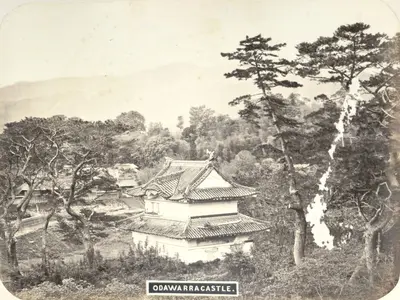
    Ise Nagauji (now calling himself Hojo Soun, adopting the famous Kamakura-era name for legitimacy) takes Odawara Castle. Kokokuji's role as primary base transitions to Nirayama and then to Odawara as the Hojo territorial center moves eastward and northward into the Kanto.

    1500

    Kokokuji continues as a secondary castle in the growing Hojo domain network, controlling the western Izu approaches and the Suruga Bay coast road. Its strategic value remains in its gateway position even as Hojo attention moves toward the Kanto.

    1590

    Following the Toyotomi destruction of the Hojo clan, Kokokuji Castle loses its administrative and military significance. With the Hojo gone and Tokugawa Ieyasu assigned to the Kanto, the castle passes out of active use. It is eventually abandoned.

In Pop Culture

other

Various historical accounts of Hojo Soun and the Later Hojo clan

Kokokuji Castle appears in scholarly and popular histories of the Later Hojo clan as the origin point — the first castle Hojo Soun held, from which he launched the extraordinary 100-year dynasty. It appears less frequently in dramatizations than Odawara or Nirayama, which have more dramatic stories.

Did You Know?

  • The mechanism by which Ise Nagauji obtained Kokokuji Castle in 1487 is itself remarkable: he intervened in an Imagawa clan succession dispute on behalf of a claimant, and his success in resolving the dispute in his patron's favor was rewarded with the castle. He was not a major lord, had no great army, and had no particular territorial claim — he was a clever political operator who placed himself at the right moment in someone else's succession crisis. The Later Hojo dynasty was founded on political acumen, not military inheritance.
  • The depth of Kokokuji's karabori dry moat — approximately 15 meters — is considered remarkable by castle researchers studying earthwork defense in the pre-stone-wall era. The investment in excavation labor for a castle of this modest size suggests that Hojo Soun (or his immediate successors who may have expanded the earthworks) took the site's fortification extremely seriously despite its regional secondary status.
  • Kokokuji, Nirayama, and Odawara form a geographic sequence of Hojo expansion northward and eastward: each castle represents a step in the dynasty's territorial growth, with Kokokuji (Suruga coast, 1487) being the foundation, Nirayama (central Izu, 1493) the second step, and Odawara (1495) the final base from which the Hojo dominated the Kanto for 95 years. Visiting all three castles traces the physical geography of one of Japanese history's most dramatic clan rises.

Score Breakdown

Tourism Score

F 30/100
  • Accessibility 5 /20
  • Foreign-Friendly 3 /20
  • Historical Value 12 /20
  • Visual Impact 6 /20
  • Facilities 4 /20

Defense Score

B 77/100
  • Terrain Advantage 15 /20
  • Entrance Defense 15 /20
  • Internal Complexity 16 /20
  • Siege Endurance 15 /20
  • Strategic Oversight 16 /20

Planning Your Visit

Best Time to Visit

Spring or autumn for pleasant walking conditions. The site is never crowded. Combine with Nirayama Castle (approximately 15 kilometers away) for a 'Hojo origins' half-day covering the first two steps of the dynasty's expansion.

Time Needed

45 minutes–1 hour.

Insider Tip

Stand at the edge of the karabori and look down into the moat. The 15-meter drop is the number that all the guidebooks give you, but standing at the edge makes it real — this is an extraordinary amount of earthwork excavation for a small regional castle. Hojo Soun, or his men, dug this. That's the detail that makes the site worth the effort.

Map

Getting There

Nearest station: Hara Station (JR Tokaido Main Line)
Walk from station: 20 min walk
Parking: Small free parking area at the castle ruins base.
Accessible with a JR Pass

Admission

Free

Free admission. The castle ruins are a public park maintained by Numazu City. Open at all times.

Opening Hours

Open00:00 – 23:59

Open year-round at all hours. A small explanatory signboard at the site entrance provides historical information. Best visited in daylight for safety on the earthwork terrain.

Facilities

  • – English guides
  • – Audio guide
  • – Wheelchair access
  • – Restrooms
  • – Gift shop
  • – Food nearby

Nearby Castles

Featured in collections

FAQ

Frequently Asked Questions

How do I get to Kokokuji Castle?

The nearest station is Hara Station (JR Tokaido Main Line). From there it is about 20 minutes on foot.

How much does Kokokuji Castle cost to enter?

Kokokuji Castle is free to enter.

Is Kokokuji Castle worth visiting?

Kokokuji Castle is a specialist destination — minimal facilities, earthwork-only ruins, and no structures above ground. The reasons to visit are the extraordinary deep karabori moat (one of the most dramatic earthwork features in the Kanto-Tokai region) and the historical significance as the absolute origin point of the Later Hojo dynasty. Castle enthusiasts completing the continued 100 Famous Castles list and Hojo history devotees will find it satisfying. Casual visitors expecting visual drama will be underwhelmed.

What are the opening hours of Kokokuji Castle?

00:00 to 23:59.

How long should I spend at Kokokuji Castle?

Plan for about 45 minutes–1 hour., depending on how closely you want to explore the grounds.