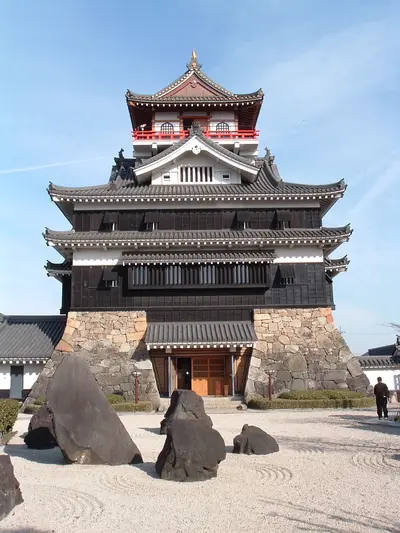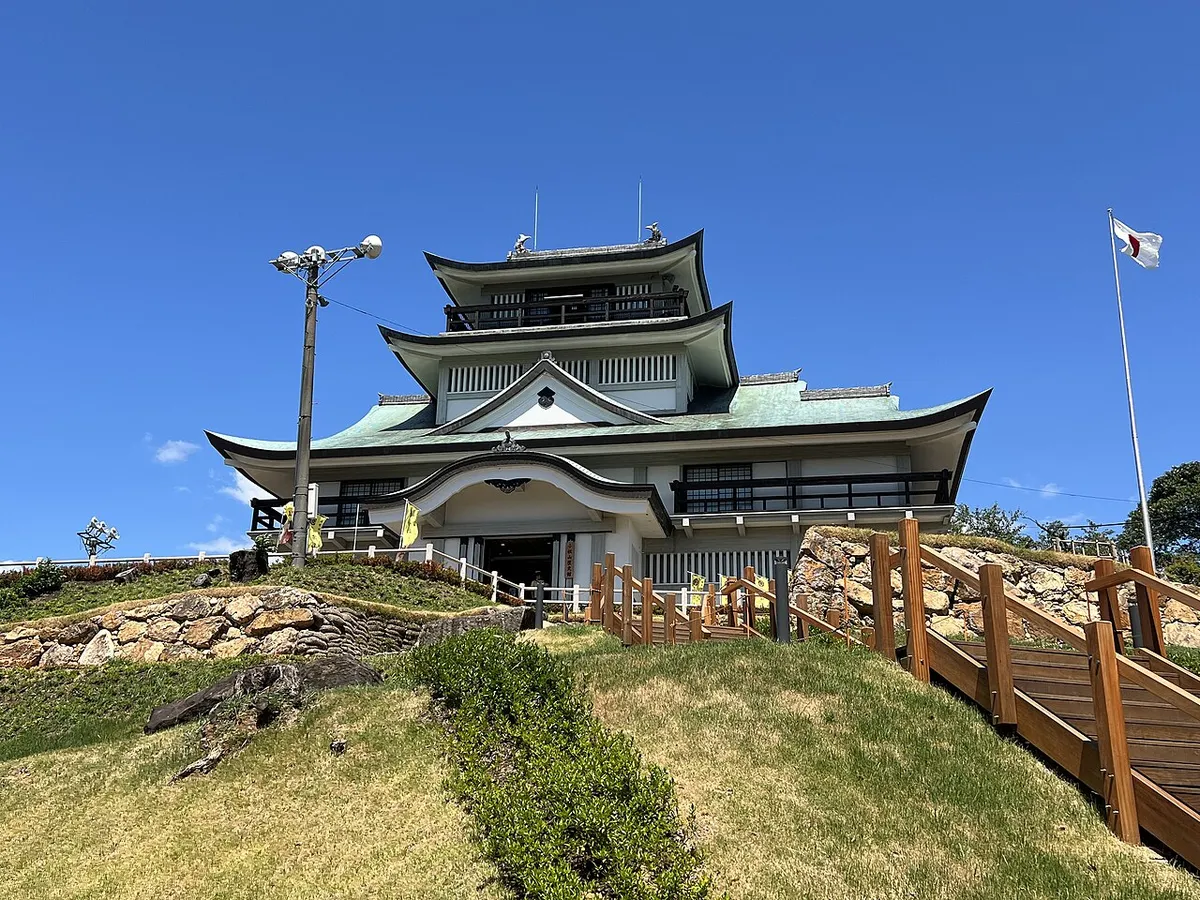
Komakiyama Castle

小牧山城·Komakiyama-jo

D Tourism Score 50/100
B Defense Score 76/100

Nobunaga's first castle — where the stone wall revolution may have begun — and the headquarters of the only campaign Hideyoshi ever lost.

#149 — Continued 100 Castles Ruins
Komakiyama Castle (小牧山城)
Photo:Mont Blank rich/Wikimedia Commons/CC0

Quick Facts

Quick Facts

Admission
¥200

¥0

Hours
09:00 – 16:30

Last entry 16:15

Nearest Station
Komaki Station (Nagoya Railroad Komaki Line)
Walk from Station
20 min walk

Bus also available

Time Needed
1–1.5 hours

Admission increased to ¥200. Children free.

Defense Overview

Defense Overview

Why Komakiyama Castle was hard to attack

This castle is hard to attack because it combines a raised core with defended outer space with enough defensive depth to slow attackers before the center.

An attacker would not get a simple direct approach to the center. They would have to cross water barriers or moat lines and push through successive outer areas before the core.

Overall score

76/100

Estimated range

70–82

Confidence

B

Usable estimate with some inference

This is a site-original comparison score for learning and comparison, not a reconstruction of one historical battle.

Radar view

Terrain 15/20 Entrance 14/20 Internal 16/20 Siege 16/20 Oversight 15/20
How this estimate was built+

This estimate combines broad terrain, approach, layout, and route-control signals. It is meant to explain the castle's defensive logic in plain English, not reconstruct a single historical attack.

Terrain Advantage

How much the terrain itself seems to help: height, slope, ridges, cliffs, water edges, and limited approach directions.

15/20

Entrance Defense

How awkward and dangerous the first entry looks: gates, bridge or moat crossings, chokepoints, and forced turns.

14/20

Internal Complexity

How hard it seems to keep pushing after entry: layered baileys, depth, compartmentalization, and repeated defensive lines.

16/20

Siege Endurance

A rough sense of long-hold potential: moats, water access, space, storage plausibility, and defensive staying power.

16/20

Strategic Oversight

How much the castle appears to command nearby roads, plains, rivers, basins, harbors, or town approaches.

15/20

Why Visit

Komakiyama Castle punches far above its size and museum quality. The historical significance is extraordinary — Nobunaga's first purpose-designed castle, the site of revolutionary early stone wall construction, and the headquarters for the one campaign that stopped Toyotomi Hideyoshi. The 100-yen admission is absurdly good value. For visitors in the Nagoya area, this is one of the most historically dense small castle sites in Japan.

Highlights

1

Nobunaga's First Proper Castle

Before Gifu Castle, before Azuchi Castle — before any of the grand fortresses that defined his legacy — Oda Nobunaga built his first purpose-designed stone castle at Komakiyama in 1563. This was the beginning of the Nobunaga revolution in castle design: the deliberate use of a hilltop stone castle as a visible statement of political authority, not just a defensive refuge. Archaeological excavations have confirmed it was one of the first castles in Japan to use a fully stone-walled compound design.
2

The Battle of Komaki-Nagakute

In 1584, two years after Nobunaga's death, Komakiyama Castle became the centerpiece of the Komaki-Nagakute Campaign — a military confrontation between Tokugawa Ieyasu and Toyotomi Hideyoshi. Ieyasu reoccupied Nobunaga's old castle and used it as his headquarters; Hideyoshi deployed a massive army to face him. The final engagement at Nagakute was the only battle Hideyoshi ever lost in personal command.

3

Archaeological Discoveries That Changed Castle History

Recent excavations at Komakiyama have produced evidence that Nobunaga's 1563 castle incorporated stone walls far earlier than previously thought — potentially rewriting the timeline of Japanese castle development. The finds suggest Nobunaga was experimenting with stone wall construction at Komakiyama before his famous Gifu and Azuchi designs, making this small hill in Aichi a critical site for understanding the origins of the Sengoku castle revolution.

Structure Details

Visitor tip

The 1967 concrete reproduction building at the summit is not historically significant as architecture, but it houses a well-presented Komaki City Historical Museum with excellent exhibits on the Nobunaga-era excavations and the Komaki-Nagakute Campaign. The real interest is the excavated stone wall sections visible on the upper hill and the panoramic views across the Nobi Plain toward Nagoya. Allow 1–1.5 hours.

Castle type

Hill castle

Hill-top flatland castle — built on Komakiyama hill (85m), a prominent isolated hill rising above the Nobi Plain north of Nagoya

Layout type

Linked compound layout

Compound style — terraced compounds ascending to the summit Honmaru, with stone walls on the upper sections

Main tower

No original tower survives. A modern ferro-concrete reproduction structure (1967) houses the city history museum but is not historically accurate as a tenshu design. The significant ruins are the excavated stone wall foundations on the upper hill.

Stone walls

Natural stone stacking

Archaeological excavations have uncovered original stone wall foundations from Nobunaga's 1563 construction — among the earliest confirmed ishigaki stone walls in Japanese castle archaeology. The excavated wall sections demonstrate that Nobunaga was already experimenting with permanent stone fortification at Komakiyama before his more famous later castles.

Key defensive features

Isolated Hill on the Nobi Plain

Komakiyama is a lone hill rising from the flat Nobi Plain — one of the most strategically significant plains in Sengoku Japan. The isolation of the hill means any approach is visible from the summit across kilometers of flat terrain, and there is no adjacent high ground from which attackers could direct fire onto the castle compounds.

Early Stone Wall Construction

The stone walls Nobunaga built at Komakiyama represented a defensive upgrade from the earthwork and timber constructions of earlier castles. The permanent stone construction demonstrated both defensive innovation and political permanence — this was a base from which to conquer, not just a refuge.

The Story of Komakiyama Castle

Originally built 1563 / Oda Nobunaga
Current form 1584 / Tokugawa Ieyasu (reoccupation and reinforcement)
    1563

    Oda Nobunaga constructs Komakiyama Castle as his primary residence and military headquarters, abandoning his previous base at Kiyosu Castle. Archaeological evidence suggests it incorporated stone wall construction that would prove revolutionary in Japanese castle design.

    1567

    Nobunaga conquers Mino Province and moves his headquarters to the more strategically positioned Gifu Castle, abandoning Komakiyama. The castle is left as a secondary fortification.

    1582

    Oda Nobunaga is assassinated at the Honnoji Incident in Kyoto. The ensuing power struggle among his generals sets the stage for the Komaki-Nagakute Campaign.

    1584

    Tokugawa Ieyasu reoccupies and reinforces Komakiyama Castle as his headquarters for the Komaki-Nagakute Campaign against Toyotomi Hideyoshi. The battle at Nagakute — where Ieyasu's forces defeat a Toyotomi flanking column — is the only battle Hideyoshi personally commanded that ended in his defeat. The campaign ends in a negotiated settlement.

    1584

    After the campaign, Komakiyama Castle is again abandoned and falls into disuse. It is never reactivated as a functioning castle during the Edo period.

    1967

    Komaki City constructs a ferro-concrete reproduction building on the summit to house the city historical museum. Archaeological excavations subsequently reveal the original Nobunaga-era stone wall foundations.

In Pop Culture

game

Nobunaga no Yabo (Nobunaga's Ambition) game series

Komakiyama Castle appears as a playable location in the long-running Nobunaga's Ambition strategy game series, representing Nobunaga's early territorial base in Owari Province.

TV

Various NHK taiga dramas featuring Oda Nobunaga

Komakiyama appears in historical dramas covering Nobunaga's rise and in Tokugawa Ieyasu-focused dramas covering the Komaki-Nagakute Campaign.

Did You Know?

  • The Komaki-Nagakute Campaign (1584) produced one of history's great strategic ironies: Toyotomi Hideyoshi, who never lost a battle that he personally commanded, was defeated at Nagakute by Tokugawa Ieyasu — the one general who would ultimately inherit the Japan that Hideyoshi unified. Hideyoshi chose to negotiate rather than continue fighting, eventually bringing Ieyasu into his alliance through diplomacy rather than conquest.
  • Recent archaeological work at Komakiyama has identified stone wall construction techniques that appear to predate Nobunaga's famous Azuchi Castle (1576) by over a decade. If confirmed by further excavation, the origins of the 'stone castle revolution' occurred here on this modest hill in Aichi, not at the grand Azuchi Castle that most histories credit with the innovation.
  • Komakiyama is famous locally for its cherry blossoms — the hill's slopes are planted with hundreds of cherry trees, and the spring viewing crowds vastly outnumber those who come for the castle history. The local Komaki Sakura Festival brings tens of thousands of visitors every April, most of whom are vaguely aware they are on a famous castle hill but primarily focused on the blossoms and food stalls.

Score Breakdown

Tourism Score

D 50/100
  • Accessibility 10 /20
  • Foreign-Friendly 7 /20
  • Historical Value 16 /20
  • Visual Impact 9 /20
  • Facilities 8 /20

Defense Score

B 76/100
  • Terrain Advantage 15 /20
  • Entrance Defense 14 /20
  • Internal Complexity 16 /20
  • Siege Endurance 16 /20
  • Strategic Oversight 15 /20

Planning Your Visit

Best Time to Visit

Late March to early April for the famous cherry blossoms (arrive early to avoid crowds). Autumn (October–November) for comfortable temperatures and clear views. Avoid the cherry blossom festival weekend if you want a quiet visit.

Time Needed

1–1.5 hours

Insider Tip

The most important thing to see at Komakiyama is not the reproduction building but the excavated stone wall sections on the upper hill, marked with explanatory boards. These original Nobunaga-era walls are the reason the site made the Zoku-100 list. Ask at the museum about the current state of archaeological excavations — new discoveries continue to be made, and the museum staff are usually enthusiastic about sharing current findings.

Map

Getting There

Nearest station: Komaki Station (Nagoya Railroad Komaki Line)
Walk from station: 20 min walk
Bus: Community bus available from Komaki Station to near the castle hill. Alternatively, the 20-minute walk from the station is manageable.
Parking: Free parking at the castle hill base. Fills up during cherry blossom season — arrive early.

Admission

Adult¥200
ChildFree

Admission increased to ¥200. Children free.

Opening Hours

Open09:00 – 16:30
Last entry16:15

Open year-round.

Facilities

  • – English guides
  • – Audio guide
  • – Wheelchair access
  • ✓ Restrooms
  • ✓ Gift shop
  • ✓ Food nearby

Nearby Castles

Featured in collections

FAQ

Frequently Asked Questions

How do I get to Komakiyama Castle?

The nearest station is Komaki Station (Nagoya Railroad Komaki Line). From there it is about 20 minutes on foot. Community bus available from Komaki Station to near the castle hill. Alternatively, the 20-minute walk from the station is manageable.

How much does Komakiyama Castle cost to enter?

Adult admission is ¥200 and child admission is ¥0.

Is Komakiyama Castle worth visiting?

Komakiyama Castle punches far above its size and museum quality. The historical significance is extraordinary — Nobunaga's first purpose-designed castle, the site of revolutionary early stone wall construction, and the headquarters for the one campaign that stopped Toyotomi Hideyoshi. The 100-yen admission is absurdly good value. For visitors in the Nagoya area, this is one of the most historically dense small castle sites in Japan.

What are the opening hours of Komakiyama Castle?

09:00 to 16:30, last entry 16:15.

How long should I spend at Komakiyama Castle?

Plan for about 1–1.5 hours, depending on how closely you want to explore the grounds.